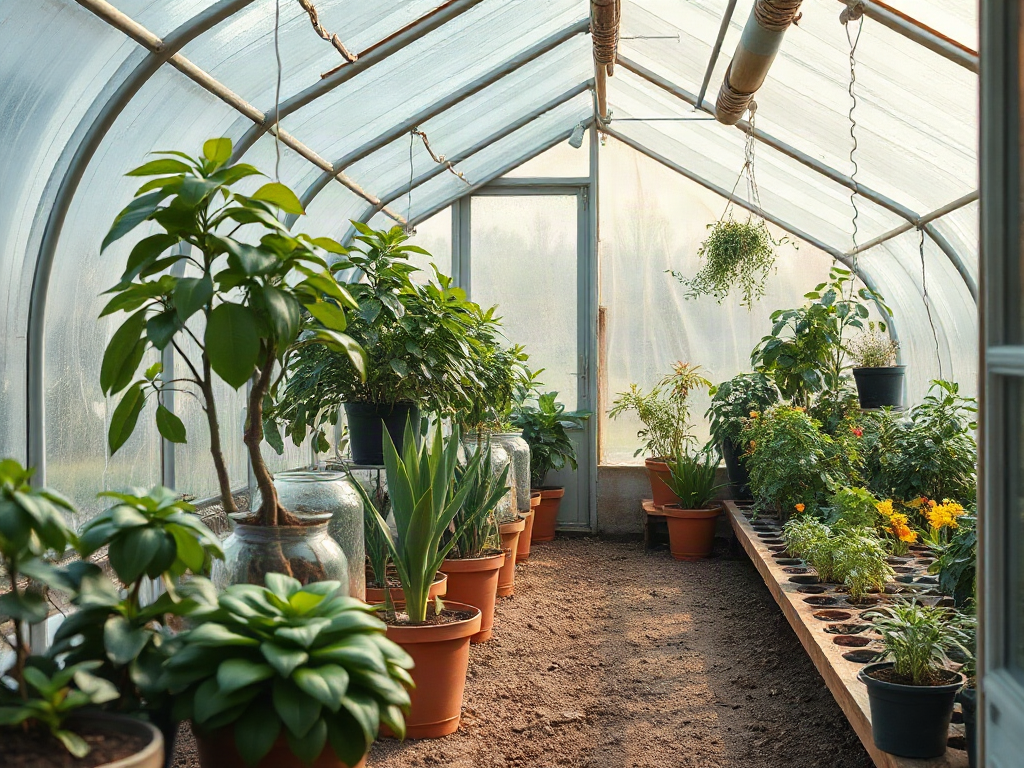
Greenhouse gardening for beginners works best when humidity and airflow are managed together through careful watering, roof or side ventilation, and gentle air circulation around plants. Water early enough for leaves and surfaces to dry before night, open vents when warm moist air accumulates, and space plants so foliage does not form a stagnant canopy. Use a thermometer-hygrometer to track patterns rather than reacting to a single reading. Condensation that persists after sunrise, musty air, wet leaves, and uneven temperatures signal inadequate ventilation, while wilting beside rapidly drying containers may indicate excessive heat or airflow rather than low humidity alone.
Why Must Humidity and Airflow Be Managed Together?
A greenhouse traps solar heat and water vapor, so its growing environment can change much faster than outdoor conditions. Sunlight warms the structure, containers, soil, and leaves. Water then evaporates from growing media and transpires through plants, adding moisture to the enclosed air. When that warm air meets a cooler roof or wall, water condenses. The result may be dripping panels, damp foliage, and pockets of still air even when the greenhouse feels comfortably warm at the doorway.
Humidity describes the moisture in the air, while airflow describes how that air moves and exchanges with outdoor air. Ventilation removes warm, moisture-laden air and replaces it with outside air. Circulation moves air within the structure, reducing sharp differences between the roof, floor, corners, and dense plant canopies. A circulation fan cannot replace ventilation because it does not remove heat or water vapor. Likewise, an open vent may not prevent stagnant pockets if shelving, tall crops, or tightly packed foliage blocks movement.
Relative humidity also changes with temperature. Air that cools overnight can reach a high relative humidity even when no additional water has entered the greenhouse. That is why an apparently dry afternoon can become a condensation problem before dawn. Beginners sometimes respond by running a fan directly at wet plants. Strong air aimed at one bench may dry nearby containers quickly while leaving a distant corner untouched. A better response combines moisture control at the source, air exchange when conditions permit, and broad, gentle circulation.
Watch the plants and structure for evidence rather than pursuing one supposedly perfect humidity number. Persistent droplets on the inside covering, water dripping onto leaves, algae on consistently wet surfaces, musty odors, and foliage that remains wet well into the morning all indicate excess moisture or insufficient exchange. At the opposite extreme, curled leaf edges, rapid container drying, and wilting during fan operation can point to excessive heat, a concentrated draft, or inadequate root-zone water.
The practical priority is to shorten the time that foliage and structural surfaces stay wet without creating harsh drafts. During a cool, rainy period, this may require restrained watering and brief ventilation during the warmer part of the day. On a bright spring afternoon, wide vent openings and stronger exhaust may be needed to release heat as well as moisture. The correct adjustment follows the greenhouse’s actual pattern, not the calendar alone.
How Should Beginners Monitor Greenhouse Conditions?
A thermometer-hygrometer placed near plant height provides a useful starting point, but placement determines whether its readings represent the crop. A sensor against a sunny wall may report radiated heat rather than the air surrounding leaves. One beside an open vent may reflect outdoor conditions. Position the instrument in a shaded, ventilated location near the main growing area, away from direct mist, heaters, and fan discharge.
Record the morning low, afternoon high, visible condensation, watering time, and vent position for at least several days. Maximum-minimum instruments or data loggers make trends easier to see, but a basic meter and notebook can still reveal the important sequence. For example, watering late in the day may be followed by closed vents, falling temperature, and heavy predawn condensation. The useful finding is not merely that humidity was high; it is that water was added shortly before the greenhouse lost its ability to vent safely without becoming too cold.
| Observation | Likely Meaning | First Check |
|---|---|---|
| Condensation remains after sunrise | Moist air is not clearing promptly | Morning vent opening and late watering |
| One corner smells musty | Local air stagnation or a persistent wet area | Blocked airflow, leaks, and crowded plants |
| Plants wilt near a fan | Concentrated airflow or heat may be increasing water loss | Fan direction and root-zone moisture |
| Upper greenhouse is hot while benches feel cool | Air is stratifying | Circulation pattern and high vent operation |
| Containers stay wet for days | Water use, drainage, or evaporation is too low | Drainage holes, media, watering volume, and plant size |
A single relative-humidity reading should not trigger an automatic response. A high reading before sunrise may fall quickly as the greenhouse warms and vents open. The same reading accompanied by dripping surfaces and wet leaves for hours deserves attention. Temperature, duration, leaf wetness, and the location of the measurement provide the context needed to distinguish a normal overnight rise from a persistent moisture problem.
Check more than one location by temporarily moving the meter or adding a second inexpensive sensor. Compare the center bench with a shaded corner or the area beneath shelving. Differences reveal dead zones that one central reading hides. Before buying automated controls, correct obvious causes: standing water, blocked vents, overcrowded benches, poorly draining pots, or a fan blowing into a solid wall. Automation is most valuable after the basic air path works.
How to Set Up Ventilation and Air Circulation
Effective greenhouse airflow needs both an entry path and an exit path. Warm air naturally rises, making high vents useful for releasing heat and moisture, while lower openings admit replacement air. In a small structure, opening a door and roof vent may create adequate passive ventilation during mild weather. Passive systems are quiet and inexpensive, but their performance weakens on still days and depends on a meaningful temperature difference or breeze.
An exhaust fan provides more predictable air exchange when passive venting cannot keep up. It should discharge outdoors, with an unobstructed intake opening on the opposite side so replacement air crosses the growing area. A powerful exhaust fan paired with a tiny intake can struggle to move its intended volume and may pull air through cracks instead. Screens, louvers, and filters also resist airflow, so they need regular inspection for dust and plant debris.
Circulation fans serve a different purpose. Position them to create a slow loop of air above and through the crop rather than a forceful stream at one group of plants. Leaves may move slightly, but they should not flutter continuously. In a narrow greenhouse, a fan mounted above bench level can send air along one side while the return path follows the other. Shelves, hanging baskets, and tall tomatoes can interrupt that loop, so test the pattern after plants mature rather than assuming an empty-house setup will remain effective.
A simple setup sequence keeps equipment decisions tied to actual problems:
- Clear the air path: Keep vents, doorways, and the space beneath benches free of stored trays and supplies.
- Use passive openings first: Open high and low vents during warm periods and observe whether condensation and temperature differences decline.
- Add gentle circulation: Aim fans across open space, not directly at seedlings or one bench.
- Add powered exhaust if needed: Choose it when heat and moisture persist despite usable vent openings.
- Recheck with a full crop: Dense foliage changes resistance and may create new stagnant zones.
Cold weather creates a real tradeoff: ventilation removes moisture but also releases heat. Sealing the greenhouse completely can allow damp air to accumulate, while leaving vents wide open may chill sensitive crops and waste energy. Brief air exchange during the warmest portion of the day, combined with early watering and modest circulation, is often more workable than either extreme. If a heater is used, keep plant material and water away from it and follow the manufacturer’s clearance and ventilation instructions.
Watering, Plant Spacing, and a Practical Daily Routine
Water management is the most direct way to limit greenhouse humidity because every unnecessary puddle, saturated pot, and wet leaf adds moisture that ventilation must remove. Water the growing medium according to plant need rather than wetting every container on a fixed schedule. Small seedlings in oversized pots may remain saturated long after established plants in smaller containers need water. Check media below the surface, container weight, and plant condition before irrigating.
Morning watering gives splashed foliage and wet floors time to dry while solar warmth supports ventilation. Apply water at the base where practical, and stop once the root zone is evenly moistened and excess has drained. Empty saucers if the crop is not intended to sit in water. Repair dripping hoses and direct drainage outside the growing area. Misting the air may cool a hot greenhouse briefly, but it is a poor default response when humidity is already high or leaves cannot dry promptly.
Spacing affects the small layer of air around each leaf. Plants placed tightly together form a continuous canopy that traps moisture and blocks fan movement. Seedlings may look comfortably spaced at transplanting yet close the gaps within two weeks of active growth. Rotate trays, prune only where appropriate for the crop, and move vigorous plants before leaves overlap heavily. More spacing reduces greenhouse capacity, but filling every available surface can produce uneven growth and make moisture control harder.
A practical daily routine should follow changing conditions rather than rigid clock times. In the morning, inspect condensation, leaf wetness, overnight temperature, and the moisture of representative containers. Open vents gradually as outside conditions permit, then water crops that actually need it. Around midday, check for heat buildup, shadows blocking sensors, and plants wilting despite moist media. Late in the day, remove standing water, reduce unnecessary irrigation, and confirm that vents and fans are set for the expected night temperature.
Imagine a small greenhouse containing tomato transplants, lettuce, and newly germinated trays. Treating all three groups alike will cause problems: tomatoes may use water rapidly, lettuce can form a dense humid canopy, and covered germination trays retain substantial moisture. Grouping plants by water use and growth stage makes irrigation more precise. Remove propagation covers gradually once seedlings emerge, give expanding lettuce enough separation, and avoid placing a circulation fan where it dries tender seedlings while barely reaching the tomatoes.
The routine is working when morning condensation clears, leaves dry predictably, containers do not remain saturated, and temperature differences between locations narrow. It is failing when adjustments merely shift the problem—for example, stronger fan operation dries one bench while a rear corner stays wet. Change one factor at a time when possible, note the result, and distinguish root-zone moisture from atmospheric humidity before adding water or fan speed.
Frequently Asked Questions
Should a greenhouse fan run all night?
Gentle circulation may be useful overnight when condensation and stagnant air are recurring problems, but avoid directing a strong draft at plants. Account for noise, energy use, outdoor temperature, and heater operation.
Is condensation inside a greenhouse always a problem?
Brief overnight condensation can occur as air cools. Persistent droplets, dripping onto foliage, or surfaces that remain wet after the greenhouse warms suggest that watering, drainage, or ventilation needs adjustment.
Where should a humidity sensor be placed?
Place it in shade near plant height with air moving freely around it. Keep it away from direct sun, wet leaves, heaters, doors, vents, and fan discharge that could distort the reading.
Can opening the greenhouse door provide enough ventilation?
A door may be adequate for a small greenhouse in mild, breezy weather, especially when paired with a high vent. Still, hot conditions or dense crops may require larger openings or powered exhaust.
Does high humidity mean plants need less water?
Not necessarily. Humid air may slow water loss, but root-zone moisture still depends on crop size, sunlight, container volume, and drainage. Check the growing medium rather than using humidity alone.
Conclusion
Reliable greenhouse control comes from observing how water, temperature, and air movement interact across a full day. Begin with a shaded thermometer-hygrometer, early and crop-specific watering, clear vent paths, and enough spacing for air to pass between plants. Use roof or side openings to remove warm moist air, then add gentle circulation to address temperature layers and sheltered corners.
Inspect the greenhouse at the times when problems are easiest to see: near sunrise for condensation, midday for overheating, and late afternoon for standing water or containers that remain saturated. Adjust one condition at a time and record what changes. If moisture persists, correct leaks, drainage, crowding, and blocked openings before relying on a larger fan. A stable greenhouse is not one with an unchanging reading; it is one where excess heat and moisture clear predictably without exposing crops to cold air or concentrated drafts.