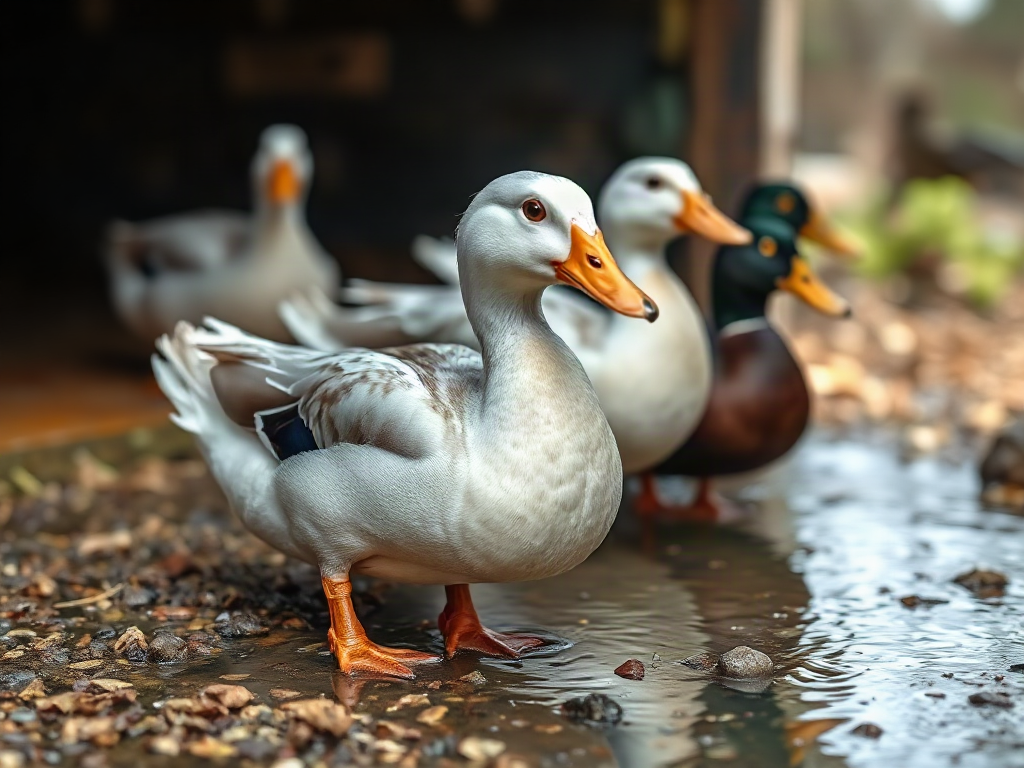
Homesteading ducks need dry, well-ventilated housing, water deep enough to rinse their eyes and nostrils, and predator control that remains secure after dark. Use absorbent bedding over a well-drained floor, place drinking and bathing stations away from the sleeping area, and lock the flock inside a roofed shelter each evening. Hardware cloth, buried or outward-facing barriers, covered runs, and two-step door latches address digging, climbing, aerial, and dexterous predators. Inspect wet bedding, muddy traffic areas, wire gaps, and door edges regularly; these are often the first signs that the system needs adjustment rather than more space or a larger pond.
Build Housing Around Duck Behavior
A useful duck house stays dry at floor level while allowing moisture to escape above the birds. Ducks release considerable moisture through breathing, wet feathers, droppings, and water carried on their bills. A tightly sealed shed may feel protected, but trapped humidity dampens bedding, intensifies odor, and creates condensation on cold surfaces. Vent openings positioned above duck height let humid air leave without directing a draft across the sleeping flock.
Floor condition matters more than decorative construction. A raised wooden floor can work if it is sound, easy to clean, and protected from rodents underneath. Concrete resists digging predators but needs a generous bedding layer because it is hard and cold. A compacted earth floor is inexpensive, yet it becomes difficult to sanitize once water and manure soak into it. On poorly drained ground, begin with grading, gravel beneath the structure, or a raised base rather than expecting extra straw to solve persistent saturation.
Ducks generally sleep on the floor instead of roosting like chickens. Give them an open bedded area without high perches, narrow ramps, or obstacles that catch feet during an evening rush. Wide, gently sloped entrances suit heavy breeds and reduce slipping. Nesting females may use low, secluded floor boxes, although ducks do not always lay where expected. Check bedding corners and covered spaces each morning before assuming egg production has fallen.
Absorbent bedding should remain loose enough to incorporate fresh material and be replaced before the lower layers become wet and sour. Pine shavings, chopped straw, or another livestock-safe material available locally may be practical. Long, matted straw can hold moisture underneath a deceptively dry surface, while fine dusty material can irritate the respiratory tract. Lift a handful from the lowest layer: clumping, warmth, a strong ammonia smell, or dark moisture marks indicate that topping up is no longer sufficient.
Space allowances vary with breed size, climate, how long ducks remain confined, and whether food or water is kept inside. A flock locked in only overnight needs less indoor room than birds confined through storms or winter days. Crowding reveals itself through rapidly soaked bedding, dirty plumage, jostling at doors, and birds unable to settle apart from one another. Treat those signs as operational evidence rather than relying on a single universal floor-space figure.
For a broader setup reference, keep the housing choices in Homesteading ducks: housing, water, and predator control connected to drainage, cleaning access, and nighttime security. A beautiful shelter that cannot be reached with a wheelbarrow or hose soon becomes harder to maintain than a plain shed with wide doors and a durable floor.
Provide Clean Water Without Creating a Mud Pit
Duck water must support drinking and face washing even when a swimming pond is unavailable. The vessel should let each duck submerge its bill deeply enough to clear food and debris from the nostrils and around the eyes. A shallow poultry drinker designed only for chickens may stay tidy, but it can prevent normal rinsing. At the other extreme, an unrestricted tub inside the shelter turns bedding into slurry as ducks climb, splash, and shake water from their feathers.
Separate water from the sleeping area whenever possible. Place drinkers outdoors on coarse gravel, pavers, a slatted platform with safe openings, or another surface that drains into a managed collection area. The surface should be stable and non-slip, with no sharp edges or gaps that can trap a leg. Moving the station periodically can protect soil in a mobile system, but rotation alone will not correct a low spot where runoff continually pools.
A small rubber tub, masonry mixing tray, or purpose-built pool is easier to dump and scrub than a permanent ornamental pond. The tradeoff is labor: small containers become dirty quickly and may need refreshing more than once during hot weather or active use. Permanent ponds reduce daily filling but accumulate manure, spilled feed, feathers, and sediment unless they have deliberate filtration, drainage, or water exchange. Pond size does not guarantee cleanliness.
Design the station around the disposal route before filling it. Dumping nutrient-rich water beside the pen repeatedly produces mud, odor, flies, and runoff. Where site conditions permit, route used water toward mulch basins or established plants without allowing it to enter wells, waterways, neighboring property, or areas where salts and nutrients can build up. Local environmental and animal-keeping rules may affect disposal choices, especially near surface water.
A practical water setup has three levels:
- Constant drinking access: A stable container deep enough for full bill immersion.
- Managed bathing access: A cleanable tub or pool located on drainage-friendly ground.
- Backup capacity: A second container for freezing weather, cleaning time, or equipment failure.
Watch the ducks and the ground to judge performance. Clear nostrils, normal face washing, reasonably clean feathers, and firm footing suggest the arrangement is working. Cloudy water immediately after replacement, algae films, slippery edges, persistent puddles, or ducks emptying a vessel by tipping it signal a need for a heavier container, better placement, more frequent service, or reduced bathing access during saturated conditions. Removing all open water to avoid mess is a poor compromise; redesign the wet zone instead.
Layer Predator Protection From Fence to Night Shelter
Predator control works best as overlapping barriers rather than confidence in one fence. Ducks have limited defense after dark and may freeze, crowd into a corner, or injure one another when frightened. The secure night house is therefore the final barrier, while the daytime run, perimeter visibility, and daily inspection reduce the number of threats reaching it.
Match materials to the attack method. Chicken wire can confine ducks, but its openings and light construction are not dependable protection against animals that pull, bite, or reach through mesh. Sturdier welded hardware cloth is better suited to vents, windows, and vulnerable lower walls. Fasten it with screws and washers or secure construction staples rather than light office-style staples. Check seams where wire meets framing; predators exploit flexible corners and small gaps rather than attacking the strongest panel.
Digging pressure can be addressed with buried fencing or an outward-facing wire apron secured flat to the soil. An apron is often easier to install around existing structures and frustrates an animal digging at the fence line. Burial may suit new construction but becomes difficult in rocky soil and can corrode unnoticed. Neither method compensates for a gate with a large bottom gap, so inspect the entire perimeter at duck-eye level and ground level.
Overhead risk depends on location and flock circumstances. A roofed run offers the clearest protection from climbing and aerial predators, while taut overhead netting may deter some birds but can sag under snow, collect leaves, or entangle wildlife if poorly maintained. Trees and shrubs provide shade and visual cover, yet branches touching a run can create access routes. Where a fully covered range is impractical, supervised turnout and strategically placed shelters reduce exposure but do not equal a predator-resistant enclosure.
Night doors need positive latches that cannot be bumped or manipulated easily. A sliding door should sit in tracks that resist lifting, and an automatic closer requires regular confirmation that every duck entered before it shut. Raccoons and other dexterous animals can defeat simple hooks or loose barrel bolts, so a second action such as a clip or carabiner adds useful resistance. Electricity-dependent doors also need a manual override and a plan for dead batteries, ice, dirt, or warped tracks.
Use evidence around the pen to identify weak points. Scratches at corners, disturbed soil, bent mesh, missing eggs, feathers near fencing, or repeated nighttime agitation deserve an immediate inspection. Motion lights and cameras can identify visitors, but they are detection tools, not physical barriers. Livestock guardian animals may suit some properties, though they require species-appropriate training and management and should not be treated as substitutes for secure construction. The predator layer of Homesteading ducks: housing, water, and predator control is strongest when every technology still has a physical fallback.
Use a Daily and Seasonal Management Routine
Reliable duck care depends on short, repeatable inspections that catch deterioration before it becomes a welfare or security problem. Water fouling, bedding saturation, loose fasteners, and erosion happen gradually, so a setup that was sound at installation may become unsafe after storms, freezing weather, or months of daily use. Routine observation is more informative than assuming the original design remains intact.
Each morning, release the flock only after scanning the run for tracks, damaged mesh, standing water, and objects blown inside. Confirm that every duck is walking normally and that eyes and nostrils appear clear. Refresh drinking water, collect eggs, and remove concentrated wet bedding around doors or any indoor drinker. At evening lockup, count individual birds rather than relying on a quick glance at the group; a quiet duck may be nesting under cover or stranded outside the enclosure.
A compact inspection order keeps essential work from being buried under optional chores:
- Count ducks and note changes in movement, appetite, breathing, or flock behavior.
- Check drinking depth, cleanliness, container stability, and drainage.
- Examine bedding at its lowest layer and remove wet concentrations.
- Walk doors, corners, roof edges, mesh seams, and the ground barrier.
- Confirm that feed storage is closed and spilled feed is removed.
Seasonal conditions change priorities. In freezing weather, provide liquid drinking water often enough for ducks to drink and rinse their bills; open heated equipment must be rated and installed for livestock settings, protected from chewing and moisture, and used according to its instructions. Ice around containers is a fall hazard, so move water to a drained pad rather than letting repeated spills freeze at the doorway. During heat, shade and plentiful drinking water become urgent, while bathing water may warm and foul faster.
Heavy rain exposes grading failures. If water flows through the house or collects against walls, correct the surface drainage rather than endlessly adding bedding. Dry spells create different problems: dusty litter, compacted soil, and predators drawn toward reliable water. Feed should remain in secure containers because spilled grain attracts rodents, which can damage structures and encourage larger predators to investigate.
Record recurring failures for a few weeks. Note where mud forms, how quickly water clouds, which latch loosens, and how much bedding the flock uses. Those observations support better purchasing decisions than adding equipment at random. A larger drinker may reduce refill labor but worsen splashing; a roof extension may protect the wet zone more effectively than another load of gravel. Reviewing Homesteading ducks: housing, water, and predator control as one connected system helps prevent a solution in one area from creating a new problem elsewhere.
Frequently Asked Questions
Do homestead ducks need a pond?
No. They need continuous drinking water deep enough to immerse their bills and regular access to clean water for bathing, but a cleanable tub can meet those needs more safely and manageably than an unmanaged pond.
Should food and water be kept inside the duck house?
Water is usually better on a drained outdoor pad because ducks rapidly soak indoor bedding. If severe weather requires indoor access, use a contained wet area and inspect the surrounding litter frequently.
Is chicken wire strong enough to protect ducks?
Chicken wire is primarily containment material. Use more robust hardware cloth on vents, openings, lower walls, and other areas where predators could bite, pull, or reach through.
How can mud around duck water be reduced?
Move water onto a stable, drainable surface, prevent containers from tipping, and direct discharge away from traffic routes. Adding loose bedding or gravel to an undrained depression provides only temporary relief.
When should ducks be locked inside?
Secure ducks in a predator-resistant shelter before darkness and count them individually. Adjust the routine seasonally as daylight changes, and verify automatic doors rather than assuming every bird entered.
Conclusion
A durable duck setup is judged by daily conditions: dry resting litter, clean bill-deep water, firm footing, intact barriers, and a complete flock behind a latched door at night. Prioritize site drainage and the night shelter before investing in a large pool or expansive range. Then separate wet activities from sleeping space and reinforce every seam, vent, gate, and ground edge according to how local predators approach.
Walk the setup morning and evening for the next week, recording wet spots, water-service demands, signs of digging, and any difficulty moving birds indoors. Correct recurring causes rather than covering symptoms with more bedding or temporary wire. That short audit will show whether the flock needs improved drainage, a different vessel, stronger fastening, or a simpler lockup routine.