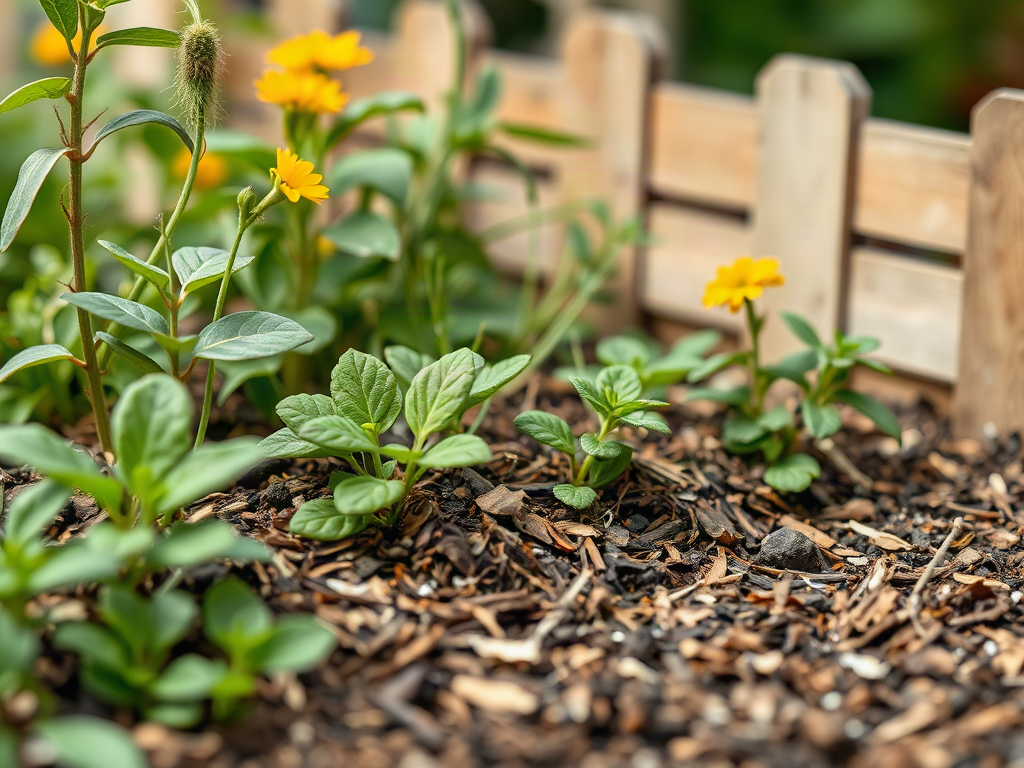
For beginner gardens, regular mulch is usually the safer starting choice, while living mulch is better reserved for established beds where plant competition can be managed. Straw, shredded leaves, or wood chips suppress weeds, reduce evaporation, and protect soil without drawing water or nutrients through active roots. Low-growing clover, thyme, or strawberries can provide living cover, but they may spread into planting spaces, shelter slugs, or compete with vegetables. Use regular mulch around seedlings and annual crops; consider living mulch beneath taller, widely spaced plants or in permanent paths.
How Do Living Mulch and Regular Mulch Work?
Regular mulch covers bare soil with material that is no longer growing. Common garden choices include shredded leaves, clean straw, arborist wood chips, compost, and bark. These materials intercept sunlight before it reaches weed seeds, reduce the direct impact of rain, and slow moisture loss from the soil surface. Organic mulch gradually decomposes, although the rate varies greatly: leaves and straw break down relatively quickly, while coarse wood chips persist longer.
Living mulch uses actively growing plants as ground cover. White clover, creeping thyme, strawberries, and other short plants can shade soil and occupy space that might otherwise support weeds. Their roots hold soil in place and keep a living root system in the bed. Unlike dead material, however, living cover continues to use water, light, and nutrients. That difference makes plant selection and spacing more consequential than they are with a layer of straw or leaves.
The effect on weeds also differs. An opaque layer of regular mulch can smother many small weed seedlings immediately when applied at sufficient depth. Living mulch needs time to establish a closed canopy, leaving gaps where weeds may germinate. Once established, it may suppress some weeds but can itself become difficult to contain. Creeping plants that root along their stems are especially likely to enter vegetable rows or surround young transplants.
A practical comparison is a newly planted tomato bed. A loose layer of straw can be placed after the soil warms and the tomatoes are established, leaving clear space around each stem. It does not compete with the tomatoes and can be pulled aside for planting. Clover sown between those same tomatoes must germinate, survive foot traffic, and remain short enough not to crowd them. During dry weather, both the tomatoes and clover draw from the available soil moisture.
Neither approach automatically improves every bed. Thick, wet cover may create hiding places for slugs, while mulch pressed against stems can hold excess moisture at the plant crown. A living cover that is poorly matched to the crop may become a persistent weed. Beginners should judge mulch by what happens beneath it: the soil should remain evenly moist rather than waterlogged, weeds should become easier to manage, and crop stems should remain open to air.
Which Mulch Fits a Beginner Garden Bed?
The best choice depends on whether the bed is newly planted, replanted frequently, or intended to remain in place for several seasons. Regular mulch suits most new annual vegetable beds because it is reversible. Gardeners can rake it aside to sow beans, replace lettuce, inspect irrigation, or add compost. That flexibility matters while learning planting distances and watering patterns.
Living mulch fits permanent or widely spaced plantings more naturally. It can work beneath established fruit bushes, along the edge of a perennial herb bed, or in paths where low cover will not compete directly with small crops. A creeping thyme path, for example, may tolerate occasional light foot traffic once established, but it is not a substitute for a durable walkway that receives daily use. Strawberries can cover soil beneath taller perennial plants, yet their runners require regular redirection or removal.
| Garden Situation | More Manageable Choice | Main Reason |
|---|---|---|
| New annual vegetable bed | Regular mulch | Easy to move for sowing and transplanting |
| Small seedlings or direct-sown rows | Light regular mulch after emergence | Living plants may shade or crowd young crops |
| Established shrubs or perennial herbs | Either method | Choice depends on water supply and maintenance |
| Permanent, lightly used path | Living mulch may fit | Low plants can cover soil where digging is infrequent |
| Dry bed with limited irrigation | Regular mulch | It reduces evaporation without consuming water |
Climate and pest pressure can change the decision. In a dry summer, living mulch may increase irrigation demand because its roots share the same moisture reservoir as the crop. In a damp, shaded bed, dense cover can keep the surface wet and conceal slugs. Regular mulch can create similar shelter if it is applied too heavily, but it can be thinned quickly when problems appear.
Maintenance style matters as much as appearance. Living cover is not a no-work option; it substitutes trimming, edging, and competition control for hauling and renewing mulch. Regular organic mulch needs replenishment as it decomposes or is disturbed. The beginner-friendly choice is the method whose failure can be corrected easily. That usually means starting with a movable material in crop beds and testing living cover in one contained edge or path before expanding it.
Choose according to the most limiting resource. Where water is scarce, avoid adding actively transpiring plants close to thirsty vegetables. Where mulch material is scarce but irrigation is dependable, a restrained living cover may be reasonable around mature perennials. Where frequent planting is central to the garden plan, keep the soil surface easy to open and close with regular mulch.
Choosing and Applying Regular Mulch
Match regular mulch to the planting rather than using one material everywhere. Shredded autumn leaves are useful around vegetables and perennials, especially when a mower or shredder has reduced matting. Clean straw is light and easy to spread, although material containing grain seed may introduce volunteer plants. Coarse wood chips are durable around shrubs, trees, and paths but can be awkward in beds that are dug and replanted several times each season.
Compost behaves differently from an opaque mulch. It adds organic matter and creates a tidy surface, but weed seeds may still receive enough light to germinate through a thin layer. Compost can sit beneath leaves, straw, or wood chips when both soil improvement and stronger surface coverage are wanted. Avoid assuming that darker or finer material automatically blocks weeds better; coverage, depth, and disturbance determine much of the result.
Apply mulch after removing established perennial weeds and watering dry soil. Mulch hides weeds more readily than it kills robust roots. A practical sequence is to clear the bed, set plants or wait for direct-sown crops to emerge, water thoroughly, and spread material without burying the crop. Keep a small open ring around stems and crowns so moisture does not remain trapped against vulnerable tissue.
- Start moderately: Use roughly 2 to 3 inches of loose leaves, straw, or similar material, then check whether it settles into a dense mat.
- Inspect underneath: Soil should feel cooler and retain moisture, not smell sour or remain saturated.
- Adjust irrigation: Water must penetrate the mulch and reach the root zone; brief surface sprinkling may wet only the covering.
- Renew selectively: Add material where soil is exposed rather than automatically piling a new layer across the entire bed.
Wood-based mulch deserves careful placement. Coarse chips on the soil surface do not behave like wood mixed into the soil. Problems are more likely when woody material is incorporated into a vegetable bed, where decomposition can temporarily alter nutrient availability near roots. Keep chips on top and move them aside before digging. For annual beds, leaves or straw are often easier to manage than repeatedly separating soil from coarse wood.
Failure signs are visible. Weeds pushing through scattered gaps indicate inadequate coverage or disturbed material. Water running off suggests matting or compaction. Slime, persistent saturation, or stems darkening at soil level calls for pulling mulch back and improving airflow. The goal is a porous cover that moderates the soil surface, not a sealed blanket.
How Can You Use Living Mulch Without Excess Competition?
Successful living mulch begins with containment and crop compatibility. Select a plant that remains shorter than the main crop, tolerates local light conditions, and can be removed if it spreads too far. Avoid aggressive ground covers whose underground stems or deeply rooted crowns make removal difficult. A plant that behaves politely in a dry ornamental border may spread much faster in a regularly watered vegetable bed.
Establish the main crop first when possible. Tall, rooted plants can tolerate nearby cover better than emerging seedlings. Around widely spaced tomatoes, peppers, or perennial bushes, maintain an open, mulched circle around each crop rather than allowing the living cover to meet the stem. This reduces immediate root competition and preserves access for watering, feeding, and inspection.
Small trials reveal more than planting an entire bed at once. Mark a short border or one section beneath established plants, then watch it through a full growing period. Check whether the cover closes gaps, how often it needs trimming, and whether the soil beneath it becomes too dry or stays excessively damp. Compare crop growth with a nearby area using regular mulch if the bed layout permits.
Water demand is the most easily missed tradeoff. Leaves cool and shade soil, but their stomata also release water. During a hot spell, the combined root systems may empty the upper soil faster than expected. Push a finger or small trowel below the surface instead of judging moisture by leaf appearance alone. Wilting in the main crop while the ground cover remains vigorous suggests that the cover is capturing too much of the available water or root space.
Control should occur before the living mulch reaches crop crowns or drops abundant seed. Clip spreading growth, remove runners aimed into planting holes, and maintain a clear boundary along rows. If the cover repeatedly rebounds from trimming or interferes with harvesting, replace it with a dead mulch rather than treating persistence as a benefit. A reversible experiment is more useful than a permanent planting that creates years of weeding.
A hybrid arrangement often works better than choosing only one method. Use low cover in permanent paths or beneath mature woody plants, then use leaves or straw within actively cultivated rows. This keeps living roots in parts of the garden where they cause little disruption while preserving flexible, low-competition space around annual crops. The approach is working when crop access remains easy, watering reaches the intended roots, and the cover can be kept within its boundary with routine trimming rather than repeated digging.
Frequently Asked Questions
Is clover a good living mulch for a vegetable garden?
Clover can cover paths or spaces between established, widely separated crops, but it may compete with vegetables for water and spread into planting rows. Test it in a contained area before using it throughout a bed.
Can living mulch replace straw or leaves completely?
Not in every bed. Regular mulch remains easier around seedlings, direct-sown rows, and crops that are replanted often. Living cover is usually better suited to permanent paths and established perennial plantings.
How thick should regular garden mulch be?
About 2 to 3 inches is a practical starting range for loose organic materials. Use less around small seedlings, keep stems uncovered, and reduce the layer if it mats or keeps soil saturated.
Does living mulch attract slugs?
Dense, moist ground cover can provide slugs with shade and shelter. Regular mulch can do the same when it remains wet, so inspect beneath either cover and thin crowded material when damage appears.
Can wood chips be used in an annual vegetable bed?
They can remain on the surface, but coarse chips are inconvenient where the soil is frequently dug. Move them aside before planting and avoid mixing large amounts of fresh woody material into the root zone.
Conclusion
Begin with the mulch that leaves room to correct mistakes. Leaves, straw, or another movable organic covering make weed control and moisture management easier while a new garden’s irrigation, pest pressure, and planting rhythm become clear. Keep the layer porous, leave stems exposed, and inspect the soil rather than assuming covered ground has the right moisture level.
Living mulch becomes more useful when the garden has stable perennial areas, dependable water, and boundaries that can be maintained. Trial it in a path, border, or beneath mature plants before allowing it near young vegetables. Watch for spreading runners, dry crop root zones, slug shelter, and difficult harvest access. A hybrid layout—living cover in permanent spaces and regular mulch in cultivated rows—often delivers the advantages of both without forcing one system onto every part of the garden.