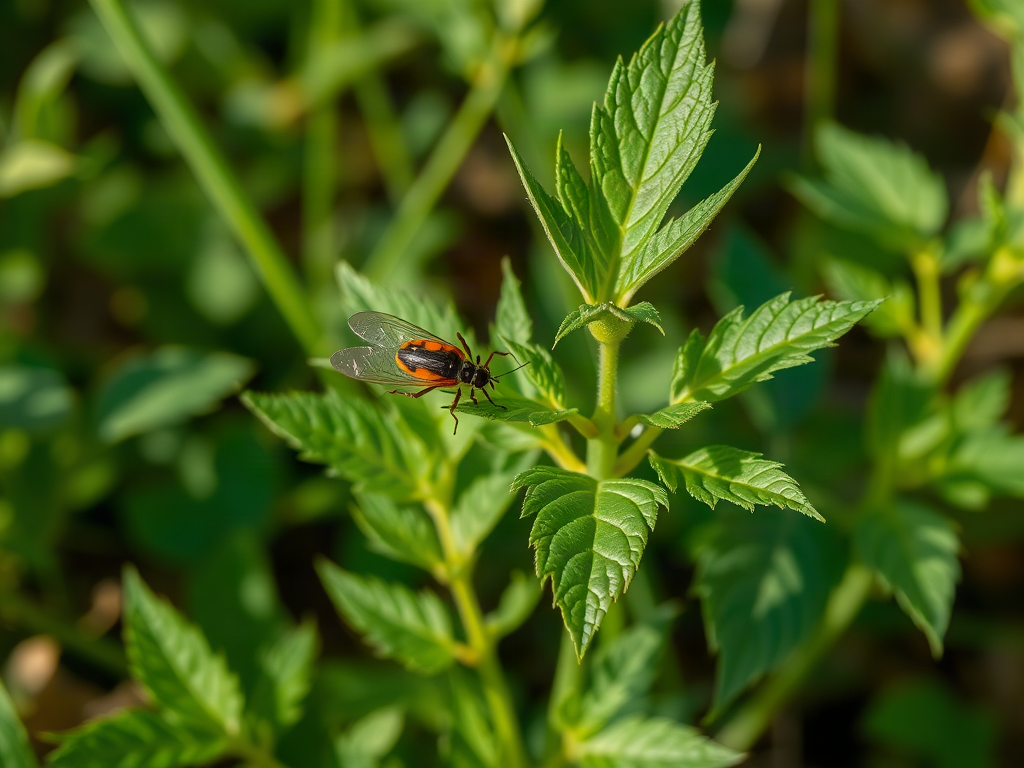
Natural pest control thresholds before crop losses depend on pest identity, crop growth stage, plant value, and whether damage is increasing or stabilizing. Scout a defined number of plants, record pests and fresh injury, then act when the likely crop loss and spread justify intervention rather than reacting to every insect. Begin with hand removal, exclusion, sanitation, habitat support for beneficial predators, and targeted biological or low-toxicity products when monitoring shows they are needed. A common mistake is spraying flowering plants or broad areas before confirming the pest, which can harm pollinators and natural enemies while failing to address the real cause.
How Action Thresholds Prevent Unnecessary Crop Damage
A pest-control threshold is the point at which intervention is justified because continued damage is likely to cost more than the treatment, labor, or ecological disruption involved. The threshold is not a universal insect count. A few caterpillars on mature kale may be tolerable, while a small number of borers inside young squash stems may require immediate attention because hidden damage can progress quickly.
Two thresholds are useful. The economic injury level describes damage severe enough to reduce crop value, while the action threshold is the earlier point at which control should begin to avoid reaching that level. Home growers rarely need precise financial formulas, but the reasoning still applies. Consider the crop’s replacement cost, harvest timing, plant age, pest reproduction rate, and the availability of natural enemies.
For example, several aphids on a vigorous pepper plant may remain below a practical action point if lady beetles, lacewings, or hoverfly larvae are present and new leaves remain undistorted. The same population on a seedling in a protected bed deserves closer attention. Aphids can multiply rapidly in warm conditions, and curled growth may shelter them from a later spray.
Weak decisions usually come from treating visibility as severity. A conspicuous beetle is not automatically the main threat, and leaf holes do not prove that the insect currently present caused them. Look for fresh feeding, increasing numbers, wilt, distorted new growth, stem injury, fruit damage, or contamination of the harvestable portion. The natural pest control thresholds before crop losses should reflect probable future damage, not alarm caused by one observation.
A practical threshold note can include the date, crop and growth stage, pest identification, number seen, kind of injury, beneficial insects observed, weather, and the next inspection date. That record makes decisions more consistent and helps distinguish a recurring pest from a brief arrival.
Scouting Methods That Reveal a Rising Pest Problem
Reliable scouting begins with a repeatable route rather than casual inspection. Walk the planting in a zigzag pattern, examine both leaf surfaces, inspect stems and soil lines, and check a few plants at the edge as well as in the center. Edge populations may reflect migration from weeds or neighboring vegetation; center damage may indicate an established population or a protected microclimate.
Sample enough plants to detect a pattern, but do not confuse an informal garden check with a statistically precise survey. For a small bed, inspecting a handful of plants from separate areas every few days may reveal whether damage is spreading. Count pests on selected leaves and record the number of newly damaged leaves. A fixed method matters more than an impressive-looking number because the same method allows comparison over time.
Use traps as indicators, not automatic treatment orders. Yellow cards can reveal flying aphids, whiteflies, or fungus gnats, but they also catch harmless insects and beneficials. A pheromone trap may show that a moth species is nearby without proving that larvae are feeding on the crop. Pair trap observations with direct inspection for eggs, frass, webbing, wilt, or fresh chewing.
Several signs help separate an active problem from old injury:
- Fresh holes usually have clean edges or visible chewing debris, while old holes may be dry, ragged, or weathered.
- Newly curled leaves, sticky honeydew, and sooty residue point toward active sap-feeding insects.
- Fine webbing, stippled leaves, and hot, dry conditions can indicate mites, but a hand lens is often needed for confirmation.
- Sudden wilt with little surface feeding may suggest root, vascular, or stem damage rather than a leaf-eating pest.
The most common scouting mistake is counting insects without checking beneficial activity. Ants protecting aphids, parasitized caterpillars, predatory bugs, and fungal disease on an insect population can change the decision. If numbers are stable for two inspections and new injury is limited, observation may be safer than intervention. If both pest counts and fresh damage rise, move from monitoring to a targeted response.
Choosing Natural Controls at the Right Threshold
Natural control works best as a sequence matched to the scale and location of the problem. Start with measures that remove the pest or interrupt its access while preserving predators and pollinators. Hand-pick beetles and caterpillars during cool morning or evening hours, pinch off heavily infested shoots when the crop can spare them, and use row covers over susceptible plants when pollination is not yet required.
Exclusion is particularly useful for seedlings and short, vulnerable planting windows. A fine mesh cover can block moths, flea beetles, or flying aphids, but it must be installed before the pest enters and secured at the soil surface. Covers also require removal when flowers need insect pollination. Treating an already infested plant under a cover can trap the problem rather than solve it, so inspect first.
Sanitation has a narrower role than many gardeners assume. Removing diseased or badly infested plant material may reduce a source of reinfestation, but indiscriminate cleanup can remove overwintering predators and valuable habitat. Remove material that is clearly harboring the target pest, dispose of it appropriately, and leave non-infested refuge where it does not threaten the crop.
Biological controls and low-toxicity products require accurate timing. Beneficial nematodes, microbial products, insecticidal soaps, horticultural oils, and botanical products do not act identically. Some work only on exposed, actively feeding stages; others need repeated coverage or favorable conditions. Soap and oil products can injure drought-stressed, heat-stressed, or tender foliage, and they may harm insects contacted directly. Follow the product label, test a small area when permitted, avoid open flowers, and never assume that “natural” means harmless.
Compare a localized treatment with a whole-bed application. If cabbage worms are concentrated on four plants, hand removal or spot treatment may protect the harvest while leaving parasitoids elsewhere undisturbed. A broad spray may be easier, but it increases contact with non-target organisms and can trigger secondary pest outbreaks when predators are removed. The threshold decision record should state why a treatment is needed, where it will be applied, and what result will count as success.
After treatment, inspect again rather than spraying on a fixed schedule. Falling fresh injury, fewer live pests, and undamaged new growth indicate that the response may be sufficient. Continued damage means the pest was misidentified, the product missed its target stage, coverage was poor, or reinvasion is occurring.
Adjusting Decisions for Crop Stage and Local Conditions
The same pest population deserves different treatment decisions at different points in the crop cycle. Young plants have less leaf area and fewer reserves, so defoliation or sap feeding can slow establishment. Near harvest, cosmetic injury may matter less on a crop where damaged leaves are discarded, but fruit, pods, roots, and heads have much lower tolerance for direct feeding or contamination.
Weather changes both pest pressure and control performance. Warm, dry conditions can accelerate mites and aphids, while wet foliage may favor caterpillar diseases but reduce the reliability of some applications. Wind makes targeted spraying difficult and increases drift risk. Rain soon after application may reduce residue or coverage, depending on the product. Check the label for timing and reapplication instructions rather than treating weather as a minor detail.
Plant stress also complicates diagnosis. Drought, compacted soil, nutrient imbalance, herbicide drift, and root disease can resemble insect injury. A plant with yellow leaves is not necessarily infested, and adding a pest treatment without confirming insects may increase stress. Examine roots, stems, growing points, and nearby plants before assigning the damage to a pest.
A useful decision sequence is:
- Identify: Confirm the pest or at least narrow it to a feeding type using the insect, injury pattern, and location.
- Measure: Record pest presence, fresh damage, crop stage, and beneficial activity using the same route at each check.
- Forecast: Ask whether numbers are rising, whether weather favors reproduction, and whether the plant can replace the damaged tissue.
- Match: Choose exclusion, removal, habitat protection, biological control, or a carefully targeted product according to the pest’s exposed life stage.
- Review: Recheck after the product’s expected window and change course if injury continues.
For instance, a few flea beetles on established eggplant may be less urgent than intense feeding on newly transplanted seedlings. Shade cloth, temporary mesh, watering at the root zone, and prompt removal may stabilize the young plants while they produce more foliage. Conversely, a mature plant carrying fruit may justify selective action when beetles begin feeding directly on the fruit, even if leaf damage remains modest.
Prioritize the harvestable part, the plant’s ability to recover, and the speed of pest multiplication. Avoid calendar-based spraying, unverified home mixtures, and treatment decisions based on a single insect. Those shortcuts often create more disruption than the original pest problem. For additional context on identification and lower-risk options, use the crop-loss threshold reference alongside region-specific Cooperative Extension guidance.
Frequently Asked Questions
What is a pest action threshold?
It is the point at which intervention is justified because continued pest activity is likely to cause unacceptable crop or harvest loss. It varies with crop stage, pest growth rate, damage type, and natural enemy activity.
Should every visible insect be removed?
No. First identify whether it is damaging the crop or acting as a predator, pollinator, decomposer, or harmless visitor. Removing beneficial insects can allow a genuine pest population to expand.
How often should a garden be scouted?
Inspect vulnerable crops every few days during active growth or favorable pest weather. Use a consistent route and record fresh injury so that rising pressure is distinguished from isolated sightings.
Are natural pesticides automatically safe for pollinators?
No. Natural products can harm bees and other non-target organisms through direct contact or residue. Follow the label, avoid open flowers, and use the smallest targeted application that addresses the confirmed pest.
What should be done when damage continues after treatment?
Recheck the identification, target life stage, coverage, weather, and possible reinvasion. Continuing damage may indicate that the product missed concealed larvae, the problem is not an insect, or a second pest is involved.
Further Reading
Authoritative Sources
- Academy of Nutrition and Dietetics
eatright.orgProfessional nutrition guidance, healthy eating resources, and practical dietitian-reviewed advice.
- U.S. Department of Agriculture
usda.govOfficial food, nutrition, agriculture, and consumer guidance from the USDA.
- NIH Office of Dietary Supplements
ods.od.nih.govResearch-based fact sheets on nutrients, supplements, dietary intake, and safety considerations.
- International Society of Sports Nutrition
sportsnutritionsociety.orgEvidence-informed sports nutrition resources and position stands for active people and athletes.
Conclusion
Effective pest control begins before visible injury becomes crop loss, but it does not mean treating every insect immediately. Set a practical action point by combining pest identification, fresh damage, crop stage, weather, plant vigor, and beneficial activity. Scout on a repeatable route, record changes, and distinguish an expanding population from old injury or harmless visitors. Use exclusion, hand removal, sanitation, and habitat protection before reaching for a product; when treatment is justified, target the pest’s exposed life stage and protect flowering plants and natural enemies. Reinspect after the expected control window and revise the diagnosis if damage persists. A threshold-based routine gives the garden room to use its own biological controls while reserving intervention for situations where delay genuinely threatens the harvest.