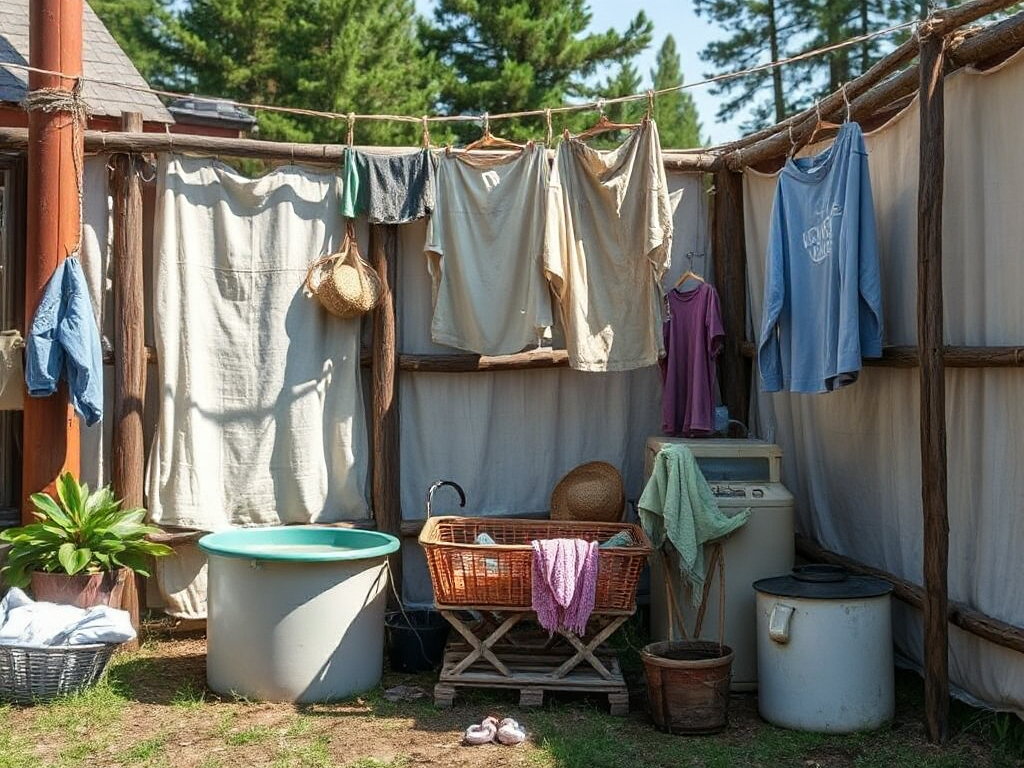
Off-grid laundry methods minimizing water and energy rely on smaller loads, deliberate soaking, low-water hand washing, thorough wringing, and air drying rather than automatic washer cycles. A wash basin, plunger, or compact manual washer can clean everyday clothing with far less electricity, while pre-treating stains prevents repeated washes. Reusing suitable rinse water for later loads or approved outdoor purposes may reduce total demand, but heavily soiled, oily, or chemically contaminated water needs separate handling. The best method depends on fabric, soil level, available water, and whether solar or battery power is reserved for higher-priority uses.
Set Laundry Priorities Before Choosing Equipment
Efficient off-grid laundry begins with controlling what enters the wash, not with buying a specialized device. Separating lightly worn garments from stained work clothes prevents a small amount of dirt from turning every load into a high-water task. Clothing that is dry, odor-free, and not visibly soiled may need airing, spot cleaning, or a short refresh instead of a full wash. This reduces water use, detergent use, drying time, and the physical effort required for each batch.
Water and energy constraints should be assessed separately. A property may have enough water for washing but limited photovoltaic output during cloudy weather, or abundant sunlight but a small cistern. Manual washing avoids motor electricity, yet it still consumes human energy and may be impractical for bulky bedding. A small electric washer can be a sensible compromise when its operating load fits the power system and the water source is reliable. The relevant comparison is not simply “manual versus electric”; it is total resource demand per usable load.
Sort by soil level, color stability, fabric weight, and drying difficulty. Lightweight shirts and underwear can be processed together, while towels, denim, and canvas require more agitation and take longer to dry. Washing heavy items separately prevents them from absorbing the available rinse water and slowing the entire routine. A useful priority order is:
- Wash underwear, socks, and clothing exposed to sweat regularly.
- Spot-clean lightly worn outer layers before deciding on a full wash.
- Schedule towels, bedding, and workwear when water and drying conditions are favorable.
A common mistake is treating a full basin as the definition of an efficient load. Overfilling makes agitation ineffective, leaves detergent trapped in fibers, and creates a need for extra rinses. Underfilling wastes preparation effort but may be appropriate when clean clothing is scarce or drying weather is short. Record how much water a typical load consumes for washing and rinsing, then adjust the batch size rather than relying on guesswork. The linked resource off-grid laundry methods minimizing water and energy can serve as a useful internal reference when comparing routines.
Low-Water Washing Methods That Actually Work
A two-basin wash system is one of the most adaptable choices for a remote home. The first container holds wash water and detergent; the second holds rinse water. A basin, covered bucket, or sturdy utility tub can work if it is easy to clean and large enough to move garments freely. A hand plunger designed for laundry can improve agitation without requiring a motor, while a compact manual washer may reduce bending and hand strain. Neither tool removes the need for sorting or measured detergent.
Use a soak-and-agitate sequence instead of continuously scrubbing. Dissolve a modest amount of low-sudsing detergent in warm water when available, add the clothing, and allow time for the solution to loosen body oils and ordinary soil. Agitate by plunging, pressing, or turning the load, then inspect high-soil areas such as collars, cuffs, socks, and knees. Short, targeted rubbing is generally more efficient than vigorous treatment of every garment. Water that becomes visibly dirty should not be expected to clean a second heavily soiled load.
For a typical small load, the practical sequence is to pre-treat stains, wash the cleanest items first, press out dirty water, and rinse only until the fabric no longer feels slippery or releases visible suds. Exact water volumes vary with fabric, basin size, detergent, and soil. A concentrated detergent can reduce transport and storage demands, but excess detergent does not produce cleaner clothing; it produces more residue and more rinsing work. Powder may be convenient where liquid products could freeze or leak, while liquid detergent can dissolve more easily in cold water.
Soap nuts, homemade cleaners, and strongly alkaline household products are not automatically efficient alternatives. Their cleaning performance depends on soil type and water chemistry, and some may leave odor, residue, or fabric damage. Chlorine bleach and other harsh chemicals also complicate wastewater handling. For routine clothing, a product with clear dosing instructions and low foam is easier to manage than a cleaner chosen only because it is marketed as natural.
Hand washing is strongest for small, frequent loads and weak for thick quilts, large rugs, or heavily contaminated workwear. A small washer may be worth the energy when it shortens labor enough to keep laundry from accumulating. The failure mode to watch is “washing until it feels clean” without a defined process. Repeated agitation can wear fibers while doing little to remove a stain that needed pre-treatment. The related page off-grid laundry methods minimizing water and energy can be linked from a household water-management section without changing the central routine.
Rinsing, Wringing, and Drying Without Wasting Resources
Rinsing often determines the true water cost of manual laundry. A vigorous first rinse removes most of the wash solution before clean water is added, so the rinse basin does not become cloudy immediately. Press garments against the side of the container or use a separate wringer to remove trapped solution. Twisting delicate fabrics aggressively may stretch seams, so use pressing or rolling for wool, knits, and lightweight synthetics.
Rinse water can sometimes be used for another compatible load, but it should be judged by what it contains. Water from lightly worn shirts may be suitable for the first wash of another low-soil load if odor and residue are acceptable. Water containing grease, solvents, strong disinfectants, or concentrated dirt should not be redirected casually. Local rules and site conditions also matter when disposing of laundry water, especially near wells, streams, food gardens, or sensitive soils. Never assume that biodegradable detergent makes unrestricted discharge harmless.
Drying is an energy decision as much as a weather decision. Sun, moving air, and low humidity shorten drying time, but direct intense sun can fade some dyes and weaken elastic. A shaded, breezy line may protect garments while still outperforming a damp indoor rack. Spread heavy items across multiple lines rather than folding them over a single cord, and leave space between pieces so the inner layers do not remain wet. Hanging shirts immediately after wringing is more effective than allowing them to sit in a basket, where mildew odors can develop.
Indoor drying requires ventilation because the water removed from clothing enters the living space. A fan may use less energy than a heater, but it still draws power and cannot compensate for a closed, humid room. When weather is poor, wash smaller batches so the rack is not overloaded. A common mistake is choosing the lowest-water wash while ignoring slow drying; damp laundry may need rewashing, which cancels much of the original saving. A good routine treats rinse efficiency and reliable drying as a single system.
For households with limited photovoltaic capacity, schedule washing when batteries are full only if an electric device is being used. Manual methods can be performed at any time, but daylight drying is still valuable. An electric spinner may provide a practical middle ground: washing remains manual while the short spin removes more water before line drying. Its usefulness depends on the appliance’s electrical demand and whether reduced drying time offsets that draw.
A Repeatable Off-Grid Laundry Routine
A reliable routine should make resource use visible. Keep a clean measuring container for water, a small stain brush, two covered tubs, a drying rack or line, and a place for dirty laundry that allows air circulation. Covered storage prevents dust and animals from adding new contamination, while breathable bags are preferable to sealed plastic for damp garments. Choose tools that can be repaired or replaced locally; a complex appliance is a poor fit if one failed seal can stop laundry for weeks.
Before washing, inspect pockets, close zippers, and separate items that could bleed dye or shed lint. Treat grease and protein-based stains according to the fabric’s care instructions rather than adding more detergent to the whole basin. Measure detergent, fill only to a workable level, and note whether the water is hard enough to leave a film. If garments emerge stiff, slippery, or strongly scented, the solution is usually less product or a better rinse—not more aggressive agitation.
- Batch deliberately: Combine items with similar soil and drying times, keeping bulky fabrics separate.
- Pre-treat selectively: Work on stains before immersion so the full load does not require prolonged washing.
- Soak, agitate, and inspect: Use time to loosen dirt, then concentrate effort on cuffs, collars, and seams.
- Press before rinsing: Remove as much wash water as possible so clean rinse water stays effective.
- Rinse to a clear endpoint: Stop when residue and visible suds are gone rather than repeating a fixed number of rinses.
- Dry immediately: Maximize airflow and separate thick layers to prevent odor and rework.
Signs that the method is working include clean fabric with little residual scent, predictable water use, and drying completed within the available weather window. Signs of failure include gray water after multiple rinses, persistent sour odor, oily patches, or clothing that remains damp until the next laundry day. Change one variable at a time—load size, detergent amount, soak duration, or wringing method—so the cause becomes clear.
Do not force every item into the same system. Hand washing may be ideal for daily clothing, while a small powered machine or occasional commercial wash may be more responsible for sleeping bags, large blankets, or contaminated protective clothing. The goal is not to eliminate every external service or electrical tool; it is to reserve water, power, labor, and drying space for the loads that genuinely need them. That judgment is central to off-grid laundry methods minimizing water and energy.
Frequently Asked Questions
What is the lowest-water way to wash everyday clothes?
A small two-basin load with pre-treatment, soaking, pressing, and one efficient rinse usually uses less water than repeated scrubbing or an overfilled tub. The exact amount depends on fabric and soil.
Does hand washing always use less energy?
It avoids motor electricity, but it uses human labor. For heavy loads, a compact washer or electric spinner may save substantial effort while still fitting a modest power budget.
Can laundry rinse water be reused?
Sometimes, especially for lightly soiled loads, but reuse depends on detergent, grease, soil level, and local wastewater conditions. Avoid redirecting chemically contaminated water near wells or edible crops.
How can clothes dry faster without a dryer?
Wring or press thoroughly, leave gaps between garments, use moving air, and place the rack where ventilation is strongest. Smaller batches dry more reliably than a crowded line.
What should not be washed manually in a small basin?
Large quilts, rugs, heavily oily workwear, and items contaminated with hazardous substances may exceed the basin’s capacity or require specialized cleaning and wastewater handling.
Further Reading
Authoritative Sources
- Academy of Nutrition and Dietetics
eatright.orgProfessional nutrition guidance, healthy eating resources, and practical dietitian-reviewed advice.
- U.S. Department of Agriculture
usda.govOfficial food, nutrition, agriculture, and consumer guidance from the USDA.
- NIH Office of Dietary Supplements
ods.od.nih.govResearch-based fact sheets on nutrients, supplements, dietary intake, and safety considerations.
- International Society of Sports Nutrition
sportsnutritionsociety.orgEvidence-informed sports nutrition resources and position stands for active people and athletes.
Conclusion
Resource-efficient laundry comes from matching the load to the available water, power, labor, and drying conditions. Separate light clothing from bulky or heavily soiled items, pre-treat stains, use measured low-sudsing detergent, and press out wash water before rinsing. Air drying works best when garments are spaced apart and placed in moving air, while an electric spinner or compact washer can be justified for tasks that would otherwise consume excessive labor. Track what happens in practice: residue, odor, slow drying, and repeated rewashing reveal where the system is failing. Start with a two-basin routine for ordinary clothing, then add equipment only when a specific load or constraint demonstrates a clear need.