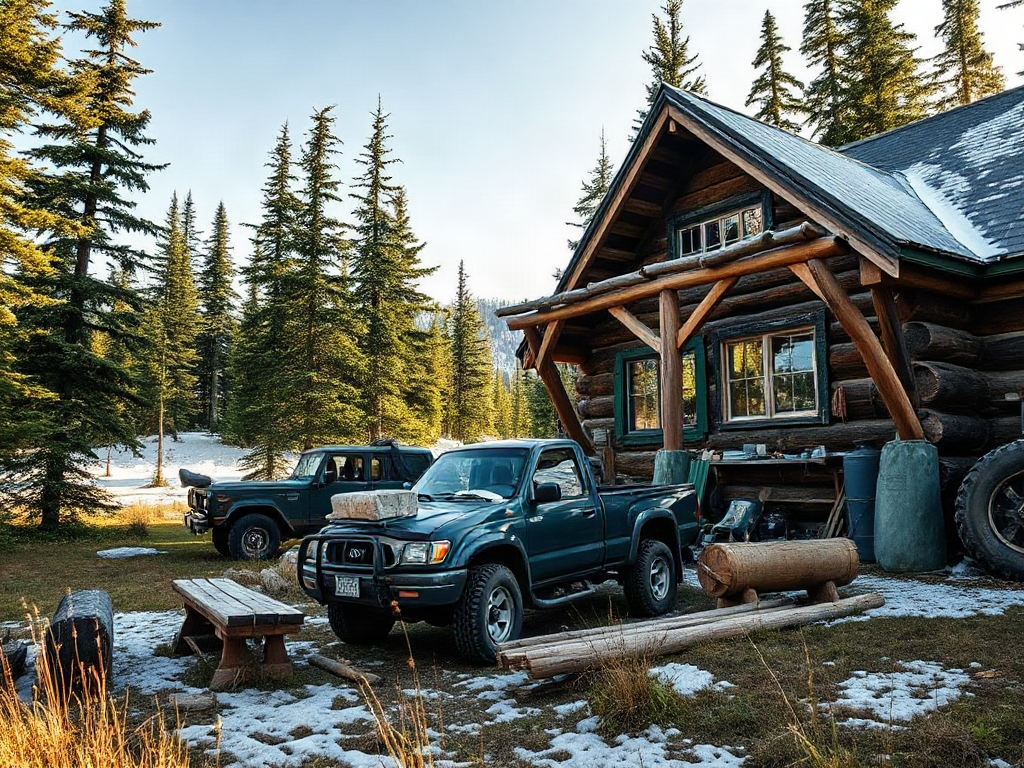
Alaska homesteading succeeds when climate, access, and preparation are evaluated as one operating system rather than separate concerns. A workable property needs dependable winter access, a water source that functions during freezing weather, protected fuel and food storage, and buildings suited to local snow, wind, drainage, and wildfire conditions. Before buying, visit during the least convenient season, verify road-maintenance responsibility, price freight and backup power, and confirm land-use and sanitation requirements with the relevant authorities. Favor a modest site you can reliably reach and maintain over cheaper acreage whose isolation, wet ground, or supply costs consume the household budget.
Match the Property to Alaska’s Local Climate
Alaska’s name on a deed reveals far less than the property’s elevation, exposure, drainage, vegetation, and distance from the coast. Maritime communities may have comparatively moderate temperatures but persistent moisture, wind, and freeze-thaw cycles. Interior locations can experience sharper temperature swings, deep seasonal frost, and shorter periods for construction or soil work. Even neighboring parcels can behave differently when one sits in a cold-air pocket and another occupies a sunny, well-drained bench.
Study the site at ground level rather than relying on regional climate descriptions. Standing water, leaning trees, exposed roots, ice lenses, wind-scoured snow, and vegetation associated with wet ground can reveal conditions hidden during a pleasant summer viewing. South-facing exposure may improve solar gain and garden warmth, but an exposed slope can increase wind loads and dry firewood poorly if precipitation blows into an open woodshed. A sheltered low area may seem comfortable until cold air settles there or spring runoff crosses the building pad.
Permafrost and seasonally frozen ground require particular caution. Ground that appears firm while frozen can lose bearing strength after thawing, while heat escaping from an unsuitable foundation may change the soil beneath a structure. Buyers should not infer subsurface conditions from a single inspection or from what worked on another property. Existing foundation movement, uneven floors, sticking doors, displaced utility lines, and recurring surface ponding warrant closer investigation by qualified local professionals familiar with the area.
Snow also acts as both a structural load and an operating constraint. Roof form, drifting around doors, safe snow-shedding zones, and access to chimneys matter more than a simple annual snowfall figure. A steep roof may shed snow efficiently but deposit it onto a walkway, fuel tank, or parked machine. A low-slope roof may retain snow and require a design appropriate to local loading. Building requirements vary by jurisdiction, so prospective owners should confirm the applicable standards rather than copy a cabin seen elsewhere.
A useful site comparison records seasonal sunlight, prevailing wind, drainage path, likely snow-storage area, wildfire exposure, and the distance between the house, water source, garden, animals, and fuel. The strongest candidate is not necessarily the warmest-looking summer parcel. It is the one whose soil, terrain, and exposure can support daily work without repeated pumping, thawing, plowing, or structural repair. Broader planning for Alaska homesteading: climate, access, and preparation should begin with this parcel-level evidence.
Test Access Before Depending on It
Access is a year-round service requirement, not a line shown on a map. A legal easement does not guarantee a driveable road, timely snow removal, bridge maintenance, or permission to improve a route. Before committing to a property, identify who owns each segment, who pays for maintenance, whether any gates or seasonal closures apply, and what happens when a culvert washes out or heavy snow blocks the approach.
Travel time should be evaluated under poor conditions rather than estimated from a summer drive. A property 30 miles from supplies may be manageable on a maintained highway and difficult on a narrow road with drifting snow, soft shoulders, or breakup damage. Remote acreage reached by boat, aircraft, snowmachine, or trail introduces weather windows, payload limits, fuel caches, and storage needs. Those constraints affect groceries, medical trips, building materials, livestock feed, replacement parts, and emergency response.
Consider a simple construction example: standard lumber might reach a road-connected site on a delivery truck, while the same order for a fly-in property may need to be broken into allowable loads and protected until every shipment arrives. A missing fitting can delay work far beyond its retail cost. Bargain acreage can therefore produce a high completed-project cost even when the purchase price is low. The practical comparison is delivered cost and labor, not the shelf price of materials.
Communication belongs in the access assessment. Mobile coverage shown on a broad map may fail behind local terrain, and internet service may require an unobstructed installation location, power, and weather-protected equipment. Test actual service at the house site and along the route. Keep navigation and contact options that do not depend on one powered device. Owners with medical needs, school obligations, or fixed work schedules should apply a stricter reliability threshold than someone using the parcel seasonally.
Signs of workable access include a defined maintenance agreement, known turnaround and parking areas, drainage that protects the roadbed, space for plowed snow, and realistic alternate travel arrangements. Warning signs include verbal-only promises, unresolved easements, no place to turn delivery or emergency vehicles, and a route that crosses water without a dependable structure. Ask neighbors how the route behaves during freeze-up, deep winter, spring breakup, and heavy rain, but verify property and maintenance claims through records and responsible agencies.
Price the equipment and time needed to keep the route usable. Owning a plow truck or tractor brings maintenance, cold-start, tire or track, fuel, and repair obligations. Paying a contractor may reduce equipment ownership but leave the household exposed when regional storms create a backlog. Neither choice is automatically better; the decision depends on route length, mechanical ability, storage, and how quickly access must be restored.
Build Reliable Water, Heat, Power, and Storage Systems
Core systems should remain safe when weather delays repairs or deliveries. That does not require duplicating every appliance, but each critical need needs a realistic fallback. Water, space heating, cooking, lighting, sanitation, and communication should be mapped from normal operation through a foreseeable outage. The plan should identify what fails first, which parts can freeze, and how long stored supplies can bridge the interruption.
Water reliability depends on source yield, quality, treatment, pumping power, pipe routing, and freeze protection. A productive summer source may become difficult to reach or may behave differently in winter. Wells, hauled water, surface water, and rain collection have different testing, treatment, storage, and legal considerations. Water intended for drinking should be evaluated appropriately, and surface water should not be assumed safe because it appears clear. Confirm well, wastewater, and sanitation requirements with the authorities serving the property.
Heat planning begins with the building envelope. Air sealing, insulation continuity, controlled ventilation, dry fuel, and correctly installed heating equipment reduce the rate at which a cold-weather problem becomes an emergency. Wood heat offers local fuel potential in some areas, but it requires cutting rights or a lawful supply, seasoning space, chimney maintenance, ash handling, and someone able to operate the system. Oil, propane, or electric heat can reduce daily handling while increasing dependence on deliveries, tanks, generators, or the grid. Many households benefit from two compatible heat options, provided both are installed and operated safely.
Power design should follow actual loads. Heating a building or water with electricity demands far more energy than running lights, communications, and efficient refrigeration. An oversized off-grid promise based only on summer solar production can fail during dark, snowy periods. Begin with an appliance inventory, starting surge requirements, daily use, battery operating limits, and the seasonal energy resource at the exact site. A generator can cover intermittent high loads, but it also needs protected fuel, ventilation, maintenance, and a safe electrical connection.
Storage converts uncertain transportation into manageable intervals. Reserve amounts should be based on the longest credible gap between resupply trips, not on a generic number of days. Store food away from moisture and animals; rotate it through ordinary meals rather than treating it as a forgotten emergency cache. Keep fuel in approved containers or systems with suitable separation and spill precautions. Frequently used repair items may include filters, belts, fasteners, fluids, fuses, pump components, chimney supplies, and fittings specific to installed equipment.
A system is working when indoor temperatures remain stable without excessive fuel use, water lines stay protected, stored goods remain dry, and routine outages can be handled without improvising dangerous connections. Recurring condensation, rapidly declining battery capacity, frozen plumbing, wet firewood, or frequent emergency trips indicate that design assumptions need correction. Review Alaska homesteading: climate, access, and preparation whenever a change to one system increases dependence on another.
Use a Pre-Purchase and First-Year Preparation Plan
A disciplined purchase review separates defects that can be repaired from constraints that will shape every year of ownership. Cosmetic cabin work is usually easier to change than unstable ground, disputed access, an impractical water source, or freight dependence beyond the household budget. Set rejection criteria before becoming attached to scenery or a low asking price.
Records deserve the same attention as physical inspection. Confirm boundaries, recorded access, taxes, permitted uses, building authority, wastewater requirements, water rights or use questions where applicable, and any restrictions attached to the parcel. Alaska contains municipalities, boroughs, and areas with different administrative arrangements; never assume that a practice allowed in one location applies statewide. A title professional, surveyor, lender, insurer, local government office, or other qualified specialist may be needed for property-specific conclusions.
Use this compact field checklist during due diligence:
- Climate: Visit in more than one season and document wind, sun, drainage, snow movement, and freeze-thaw effects.
- Access: Verify the legal route, physical condition, maintenance duty, delivery limits, and emergency options.
- Water and sanitation: Identify the source, testing and treatment needs, winter protection, storage, and lawful wastewater approach.
- Structures: Inspect foundations, roofs, chimneys, ventilation, moisture damage, fuel systems, and utility penetrations.
- Operating budget: Price delivered fuel, freight, road work, insurance, communications, replacement parts, and travel.
The first year should favor observation and reliability over rapid expansion. Repair drainage, weatherproof buildings, establish safe heat and water, organize fuel, and learn the property’s seasonal patterns before adding livestock, a large garden, or multiple outbuildings. For example, placing a permanent garden after one sunny June can backfire if late-season shade, moose traffic, wet soil, or spring runoff becomes apparent later. A small protected trial plot provides better evidence at lower cost.
Preparation should include a household decision plan for fire, injury, severe weather, communication loss, and an unusable road. Post essential contacts, maintain suitable first-aid supplies, know the property’s location in a form responders can use, and decide when conditions warrant leaving early rather than waiting. Wildfire preparation, defensible space, burn restrictions, and evacuation information should come from current local and state authorities because conditions and requirements can change.
Track fuel use, generator hours, water consumption, road costs, maintenance failures, and resupply frequency through the first winter. These records turn assumptions into a workable second-year budget. If supplies run short repeatedly or routine repairs require emergency freight, the operating plan is underestimating lead time or inventory. If systems remain stable and reserves rotate normally, expansion can proceed in measured stages. That sequence makes Alaska homesteading: climate, access, and preparation a continuing management practice rather than a one-time buying exercise.
Frequently Asked Questions
What should I check first when evaluating an Alaska homestead?
Check legal and physical access, winter water reliability, drainage, ground conditions, and the delivered cost of fuel and materials before focusing on cosmetic improvements.
Should I visit an Alaska property during winter before buying?
Yes, when feasible and safe. A cold-season visit can reveal drifting, road maintenance, limited sunlight, heating performance, frozen plumbing risks, and travel times that summer conditions conceal.
Is off-grid solar enough for an Alaska homestead?
It may cover selected loads, but production varies sharply by season and location. Size the system from measured loads and winter conditions, with a realistic backup source and protected fuel if required.
How much food and fuel should a remote household store?
Base reserves on the longest credible resupply interruption, household consumption, safe storage capacity, and seasonal access. Rotate food and fuel so the reserve remains usable rather than forgotten.
Can I build anywhere on rural Alaska land?
No universal answer applies. Boundaries, access rights, land status, local authority, wastewater rules, water use, building requirements, and site hazards must be confirmed for the specific parcel.
Further Reading
Authoritative Sources
- University of Alaska Fairbanks Cooperative Extension Service
uaf.eduExtension resources provide Alaska-specific information on food production, soils, energy, homes, and rural living
- USDA Natural Resources Conservation Service in Alaska
nrcs.usda.govNRCS materials can help landowners investigate soils, conservation concerns, water management, and site limitations
- Alaska 511
511.alaska.govThe state travel-information service reports current highway conditions, closures, incidents, and construction affecting access
- National Weather Service Alaska Region
weather.govOfficial forecasts, warnings, and regional weather information support seasonal work and emergency planning
Conclusion
A strong Alaska property is one whose difficult seasons fit the household’s skills, time, health needs, and operating budget. Treat winter travel, water protection, heating demand, freight, and ground behavior as recurring costs rather than problems to solve after purchase. Verify records and local requirements, inspect the site under unfavorable conditions, and calculate delivered costs before deciding that remote acreage is affordable.
Once a parcel is chosen, secure drainage, shelter, heat, water, sanitation, communications, and reserves before expanding production. Record how the site performs through a full seasonal cycle, then use those observations to place gardens, storage, access improvements, and additional buildings. Deliberate sequencing costs less than repeatedly relocating or redesigning systems that were installed before the land’s constraints were known.