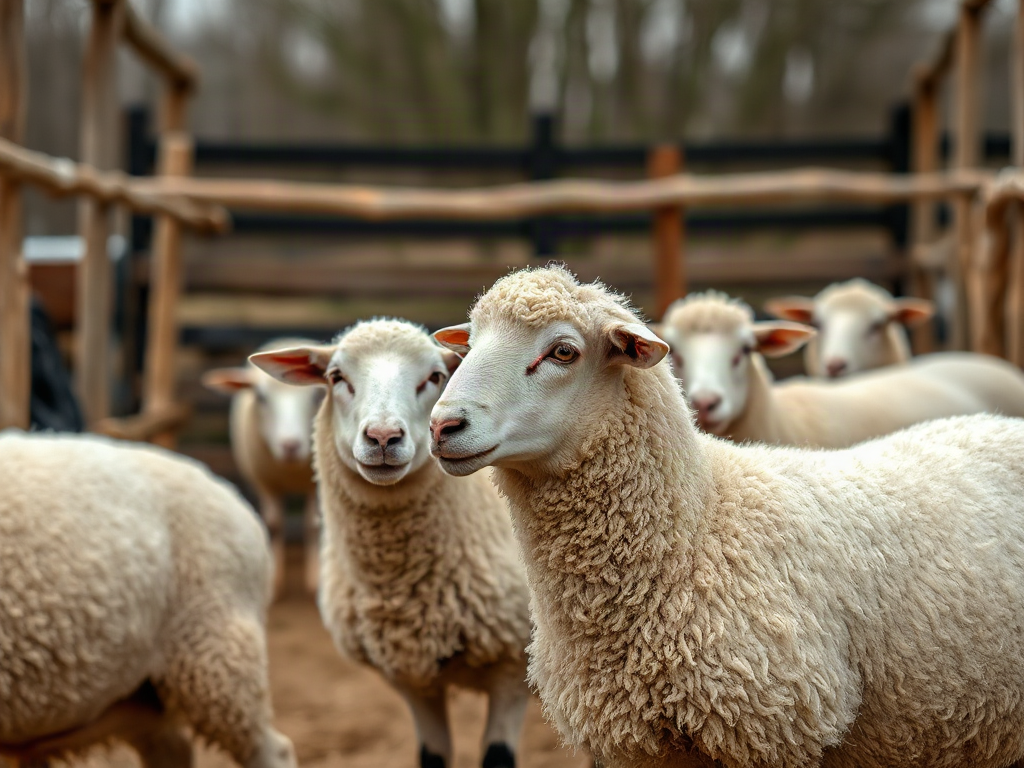
Keeping sheep successfully as a beginner means combining secure fencing, forage-based feed, and dry shelter with daily checks for health, water, and escape risks. Use sheep-safe woven wire or well-trained electric fencing, provide pasture or tested hay with sheep-formulated minerals, and keep clean water available at all times. Shelter should block wind and precipitation while allowing ventilation and enough room for every animal to lie down without crowding. Before buying sheep, inspect the property for toxic plants, loose wire, predator access, and gaps around gates.
Plan the Flock Before Buying Sheep
A workable sheep setup begins with the land, labor, and purpose of the flock rather than a preferred breed. A household keeping a few wethers as grazing animals has different feed and facility needs from one managing breeding ewes, newborn lambs, or dairy sheep. Breeding introduces lambing space, closer nutritional management, and the possibility of emergency veterinary care. Beginners who want a simpler entry point may find healthy, calm wethers or nonbreeding ewes easier to manage.
Sheep should not be kept as solitary animals. They use flockmates for security, movement cues, and normal social behavior, so plan for at least two compatible sheep. At the same time, avoid buying more animals than the pasture can support. Carrying capacity varies with rainfall, soil, forage species, season, and grazing management; a fixed animals-per-acre rule can be badly misleading. A local agricultural extension office can help interpret regional pasture conditions without pretending that productive spring grass will remain equally productive during drought or winter.
Walk the property at sheep height before animals arrive. Remove loose wire, sharp sheet metal, discarded netting, and objects that could trap a head or leg. Identify ornamental and wild plants rather than assuming every green plant is safe. Check whether a livestock veterinarian serves the area, where suitable hay is sold, and how water will reach each paddock during freezing weather or power outages.
A quarantine pen also belongs in the initial plan. Newly purchased sheep can carry parasites, foot problems, or contagious illness without obvious signs on sale day. Keep newcomers physically separated while monitoring appetite, manure, feet, and general behavior, and consult a veterinarian about an appropriate health and parasite-management process. The common beginner mistake is buying animals first and attempting to repair boundaries, locate hay, and arrange veterinary support afterward. The practical sequence is the reverse: prepare containment, water, forage, shelter, and handling space before transport is scheduled.
Choose Fencing That Controls Sheep and Predators
Sheep fencing must perform two jobs: keep the flock where it belongs and reduce access by predators. Woven livestock wire is often a practical perimeter choice because it creates a visible physical barrier. Openings should be small enough to limit trapped heads, especially where horned sheep or lambs are present. The bottom edge needs close contact with uneven ground, while corners and end posts must withstand wire tension rather than leaning after the first season.
Electric fencing can reinforce a permanent boundary or divide pasture for rotational grazing. It works through a memorable shock, not physical strength, so voltage, grounding, vegetation control, and animal training all matter. A fence hidden by tall wet grass may lose effectiveness, and sheep with heavy wool may not receive a convincing contact on insulated parts of the body. Train animals inside a secure physical enclosure where they cannot run through the wire when first encountering it. Portable electric netting offers flexible paddock changes, but it requires frequent inspection and can entangle animals if it sags or loses power.
Barbed wire alone is a poor default for close sheep areas because wool and skin can catch on it. Existing barbed-wire boundaries may require an offset electric strand or a safer interior fence rather than being accepted as adequate. Gates deserve equal attention: chain gaps, spaces beneath gates, and poorly aligned latches often become escape routes even when the main fence is sound.
Predator pressure changes the design decision. A boundary that contains quiet adult sheep may not stop roaming dogs, coyotes, or other local predators. Night confinement, electric offsets, livestock guardian animals, or more substantial perimeter construction may be appropriate depending on the location. Guardian animals are not automatic solutions; they require suitable selection, care, fencing, and management of their own.
Inspect the fence by walking it rather than viewing it from a vehicle. Look for disturbed soil, wool caught on wire, leaning posts, dead zones in electric lines, and repeated pacing near a particular corner. For a fuller property-preparation sequence, use this keeping sheep setup reference alongside a site-specific predator assessment. Escapes or repeated testing usually indicate a physical gap, inadequate power, social distress, or attractive forage across the boundary—not simply a “bad” sheep.
Build a Forage-Based Feeding System
Most mature sheep should receive a diet centered on suitable pasture or good-quality hay, with adjustments for age, body condition, pregnancy, lactation, weather, and forage quality. Green pasture can appear abundant while providing less usable feed than expected if it is overmature, trampled, drought-stressed, or dominated by unpalatable plants. Hay varies just as widely. A forage test gives more useful information than color alone and helps determine whether a particular cutting matches the flock’s needs.
Introduce dietary changes gradually. Sheep depend on rumen microbes to process forage, and abrupt movement from dry hay to lush pasture—or sudden access to grain—can disrupt digestion. Concentrates may be useful for animals with higher nutritional demands, but they are not a routine substitute for forage. Grain also introduces risks when quantities are guessed or animals gain accidental access to storage. Keep feed bins secured and ask a veterinarian or qualified livestock nutrition adviser to formulate rations for growing, pregnant, lactating, old, or underweight animals.
Use minerals labeled specifically for sheep. Products intended for other livestock may contain copper levels unsuitable for sheep, while mineral needs can still vary by forage and region. Do not assume that a generic red mineral block provides a balanced solution. Place loose sheep mineral in a covered feeder, keep it dry, and monitor consumption rather than adding unmeasured supplements to every ration.
Clean water is a daily requirement, not a secondary part of feeding. Consumption changes with temperature, lactation, forage moisture, and diet. Troughs should be easy to scrub, positioned to limit manure contamination, and checked for ice, algae, leaks, or a failed float valve. A full-looking trough is not necessarily usable if the surface is frozen or the water has become foul.
Pasture rotation can give grazed plants recovery time and reduce repeated grazing of favorite areas, but rotation alone does not eliminate internal parasites. Moving sheep too slowly, returning them too soon, or grazing plants extremely short can maintain exposure. Fecal testing, body-condition assessment, eyelid evaluation when appropriately taught, and veterinary guidance are more defensible than routine deworming on a calendar. Unnecessary treatment can contribute to drug resistance.
Track body condition by handling sheep because wool conceals both weight loss and excess fat. Reduced appetite, separation from the flock, abnormal manure, a swollen left abdomen, grinding teeth, or rapid condition loss warrants prompt investigation. The feeding principles in Keeping sheep for beginners: fencing, feed, and shelter work best when visual observation is paired with hands-on checks and forage assessment.
Provide Dry, Ventilated Shelter and a Safe Handling Area
Sheep need protection from persistent rain, wind, temperature extremes, and intense sun, but a tightly sealed building can create worse conditions than an open-sided shed. Moisture from respiration, wet bedding, and manure accumulates when airflow is restricted. The result is damp fleece, ammonia at floor level, and an environment that is harder to keep sanitary. Shelter should remain dry and draft-protected where sheep rest while still allowing stale, humid air to escape above them.
A three-sided shed may be adequate for a small flock in some climates when its open face is oriented away from prevailing storms and the site drains well. Severe winters, lambing, prolonged wet weather, heat, or heavy predator pressure may justify a more enclosed structure. Local climate matters more than copying a building from another region. Shade and cross-ventilation may be the priority in a hot climate, whereas snow load, frozen water, and wind exposure dominate cold-weather planning.
Floor area must allow every sheep to enter, turn, and lie down without weaker animals being forced outside. Crowding also increases bedding moisture and competition around feeders. Add clean bedding before the underlying layer becomes saturated, and remove accumulated material often enough to control moisture and manure. If the shed floor remains wet after rain, adding bedding treats the symptom; roof runoff, surface grading, or drainage must be corrected.
Place hay feeders so sheep cannot stand inside them or pull large amounts of hay onto the floor. Avoid feeder designs that trap heads, horns, or legs. Feeding hay directly on muddy ground wastes forage and increases contamination. Water should be nearby but positioned so spills do not soak the sleeping area.
A small catch pen and handling alley are nearly as valuable as the shelter itself. Sheep that must be chased around a large paddock become stressed, and routine work becomes difficult for the keeper. A compact pen makes foot inspection, body-condition checks, shearing preparation, and veterinary treatment more controlled. Smooth surfaces, secure gates, and non-slip footing reduce injury risk for both sheep and handlers.
Fire safety and access also shape the layout. Store hay away from ignition sources, keep electrical work protected from animals, and maintain a route wide enough for feed delivery or emergency access. The frequent mistake is spending the entire budget on a picturesque barn while leaving poor drainage, awkward gates, or no handling system. A modest, dry shed connected to a functional pen is often more useful than a larger building that cannot be cleaned or managed efficiently.
Use a Daily and Seasonal Care Checklist
Consistent observation catches problems before they become difficult to manage. Healthy flock behavior provides a baseline: sheep generally move, eat, ruminate, and rest with their companions. An animal hanging back, refusing feed, repeatedly lying down, breathing unusually, or moving stiffly deserves a closer look. Quiet prey animals may show subtle illness, so waiting for dramatic symptoms can lose valuable time.
Use a short routine that fits every visit:
- Count and observe: confirm every animal is present, mobile, and behaving normally.
- Check water and feed: verify flow, cleanliness, forage supply, and normal appetite.
- Scan fences and gates: look for lost tension, low electric output, digging, debris, and open latches.
- Inspect shelter conditions: notice wet bedding, condensation, sharp damage, crowding, or strong ammonia odor.
- Examine concerns closely: check feet, manure, fleece, eyes, and body condition when behavior changes.
Seasonal work includes shearing for breeds that do not naturally shed, hoof assessment, pasture planning, winter hay purchasing, and vaccination or parasite decisions made with veterinary input. Hooves should be checked regularly, but trimming frequency varies with terrain, moisture, growth, and the individual. Excessive trimming can injure sensitive tissue, while neglect allows distorted growth and can conceal foot disease. Persistent limping, odor, heat, swelling, or separation of hoof tissue requires proper identification rather than repeated blind trimming.
Keep records for purchases, breeding status, treatments, withdrawal periods, shearing, body condition, and unusual symptoms. Records reveal patterns that memory misses, such as one paddock repeatedly preceding parasite trouble or a ewe losing condition at the same production stage. They also give a veterinarian clearer information during a call.
Success is visible in stable body condition, steady forage intake, clean water use, dry resting areas, secure boundaries, and animals that move comfortably with the flock. Repeated escapes, chronic muddy bedding, wasted hay, falling condition, or frequent emergency treatments signal a system problem. Revisit stocking pressure, drainage, ration suitability, and handling access rather than treating each event as unrelated. A structured beginner sheep checklist can keep those connected priorities visible during the first year.
Frequently Asked Questions
Can a Beginner Keep Just One Sheep?
No. Sheep are flock animals and generally need at least one compatible sheep companion. Human attention or another livestock species does not fully replace normal sheep-to-sheep social behavior.
What Type of Fence Is Best for a Small Beginner Flock?
Well-installed woven livestock wire is a dependable permanent boundary. Properly energized electric fencing can reinforce it or create internal grazing divisions, but it requires grounding, training, and regular testing.
Do Sheep Need Grain Every Day?
Many mature sheep can live primarily on appropriate pasture or hay. Grain should match a defined nutritional need and be introduced gradually, preferably with ration guidance for growing, pregnant, or lactating animals.
Can Sheep Stay Outside During Winter?
Cold-tolerant sheep may spend substantial time outside if they have adequate forage, unfrozen water, dry footing, and protection from wind and precipitation. Climate, fleece condition, age, and health affect what is safe.
How Often Should Sheep Be Checked?
Check them at least daily, with additional checks during lambing, severe weather, illness, or management changes. Confirm head count, appetite, movement, water supply, fencing, and shelter condition each time.
Conclusion
A sound first flock is built around dependable systems rather than improvised daily fixes. Finish the perimeter, test every gate and electric circuit, secure a reliable hay source, and establish clean water before sheep arrive. Match stocking numbers to seasonal forage rather than peak spring growth, and reserve a dry area for quarantine and handling.
Once the flock is home, use behavior and hands-on body checks together; wool can hide declining condition, and sheep may show illness quietly. Repair wet shelter floors at the drainage source, investigate repeated escapes, and seek veterinary help for sudden appetite loss, severe bloating, breathing difficulty, persistent lameness, or rapid deterioration. Starting with a small compatible group gives a new keeper room to improve grazing, recordkeeping, and handling skills without overloading the land or facilities.