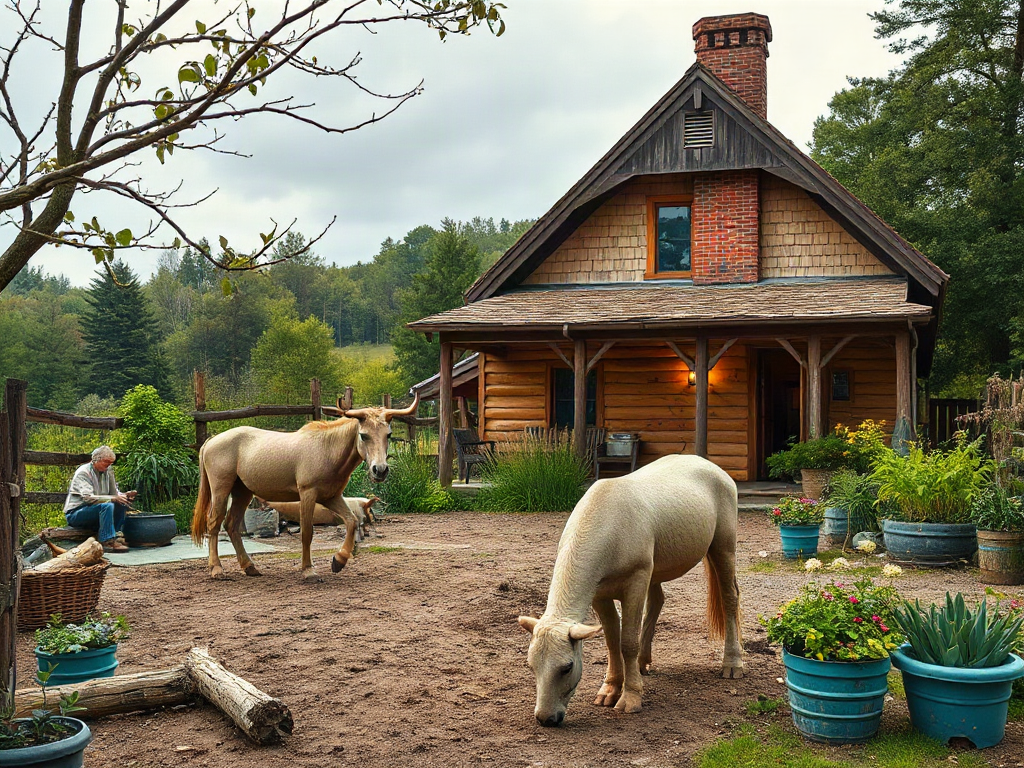
Becoming self-sufficient on a small property begins with reducing household demand, mapping usable land, and building reliable food, water, energy, and maintenance systems in stages. Prioritize a productive kitchen garden, rainwater storage where permitted, efficient heating and electricity use, and preservation methods matched to what you actually consume. Track yields, expenses, storage losses, and seasonal gaps before expanding livestock or buying specialized equipment. A small property rarely supplies every household need, but careful crop selection, soil improvement, repair skills, and dependable backup sources can substantially reduce outside dependence without exhausting the land or its occupants.
What Can Your Property Reliably Support?
A useful property assessment begins with observation rather than a shopping list. Record where sunlight falls in each season, which areas stay wet after rain, how water moves across slopes, where wind is strongest, and how easily you can reach each growing area. A sunny quarter-acre with dependable water may produce more useful food than several shaded or poorly drained acres. Buildings, mature trees, access lanes, septic components, utility easements, and setbacks can reduce the area available for cultivation.
Measure household demand at the same time. Review several months of grocery purchases and group foods by quantity, cost, storage life, and suitability for home production. Salad greens may be expensive and easy to grow in little space, while wheat requires substantial ground, harvesting effort, and processing. Potatoes, dry beans, winter squash, herbs, berries, fruit trees, and frequently eaten vegetables often provide a better return on limited land. The right mix depends on climate, diet, water, and available labor—not on an idealized homestead checklist.
Separate essential functions from ambitious projects. An accessible vegetable plot, compost area, secure tool storage, and reliable irrigation deserve space before livestock housing or a large orchard. Perennial crops can be valuable, but trees may take years to bear and can cast shade over annual beds. Chickens can produce eggs and manure, yet they also require purchased or home-grown feed, predator protection, daily care, and a lawful location. Confirm local rules before adding animals, structures, wells, wastewater systems, or large rainwater installations.
Estimate capacity using conservative conditions. Ask what the property can sustain during a dry summer, a busy month, or a modest crop failure—not only during a favorable season. Keep a simple map showing sun exposure, water sources, storage, paths, and proposed projects. A workable layout minimizes repeated carrying: compost sits near the garden, harvested produce has a short route to the kitchen, and water storage is positioned where gravity or a short hose can help.
A common mistake is treating every unused corner as production space. Some land should remain available for access, drainage, habitat, crop rotation, and future repairs. The assessment is working when routine tasks fit the household schedule and the site can absorb a poor season without the entire system failing.
How Should You Build a Small-Property Food System?
Begin with foods the household eats regularly and can grow, harvest, and store with the available time. A compact intensive garden is usually a more manageable first project than trying to reproduce an entire commercial farm. Permanent beds reduce repeated soil compaction, while trellises move peas, beans, cucumbers, and some squash upward. Succession planting can place a second crop into ground vacated by early greens, radishes, or peas.
Plan by meals rather than seed varieties. If the household uses tomato sauce weekly, determine how many plants you can irrigate, support, harvest, cook, and preserve. If fresh greens are the priority, sow small amounts at intervals instead of planting one large crop that matures at once. Storage crops deserve protected, well-drained ground because they can supply food long after the garden stops producing. Herbs and berries can occupy edges where broad annual beds would be awkward.
Diversity protects against weather, pests, and timing failures. Several crops with different root depths and harvest windows are less vulnerable than a large planting of one staple. Diversity still needs discipline: planting dozens of unfamiliar vegetables can create waste if nobody wants to eat them. A better first-year comparison is two tomato varieties, two bean types, and a limited selection of dependable roots and greens. Record sowing dates, harvest amounts, pest pressure, and whether each crop earned another season.
Preservation capacity should limit production. Freezing is convenient but relies on electricity and freezer space. Canning can make shelf-stable food, but safe methods, tested recipes, suitable jars, and correct processing are necessary. Drying works well for many herbs and some produce, while cool storage can suit crops such as potatoes, onions, garlic, and winter squash when temperature and humidity are appropriate. Never improvise food-safety processes merely to save a surplus.
Livestock belongs later in most small-property plans. Hens may convert purchased feed and suitable scraps into eggs, but they do not create food without inputs. Rabbits or dairy animals bring different feed, housing, breeding, processing, veterinary, and legal demands. Compare the full annual cost and daily workload with buying the same food locally. Animals make sense when their products are valued, their manure can be managed, and care remains dependable during travel, illness, and winter.
Signs of a sound food system include declining waste, improving soil, harvests that match kitchen use, and manageable weekly labor. Warning signs include repeated gluts, neglected beds, rising feed bills, insufficient storage, or dependence on emergency watering. Correct those bottlenecks before expanding cultivated area.
How Do You Secure Water and Maintain Fertile Soil?
Water security depends first on conservation, then on storage and backup supply. Calculate where irrigation is genuinely needed and reduce losses with mulch, soil organic matter, targeted watering, and crops suited to local rainfall. Drip lines or carefully placed soaker hoses generally deliver water closer to roots than overhead sprinklers, although every system needs inspection for leaks, clogging, and uneven pressure.
Roof runoff can supplement garden irrigation where collection is lawful and roofing materials are suitable for the intended use. Storage volume must be matched to roof area, rainfall patterns, dry intervals, and demand. A small barrel fills quickly in a storm but may empty after a few hot days. Larger tanks provide a longer buffer but require a stable base, screened openings, managed overflow, winter protection where relevant, and safe separation from drinking-water plumbing. Untreated collected rainwater should not be assumed potable.
Design overflow before installing storage. Water released beside a foundation, septic area, path, or downhill neighbor can create a larger problem than the tank solves. Direct excess water toward a lawful, stable drainage point or a planted area able to receive it without erosion. Check local building, health, and water rules before installing tanks, pumps, wells, ponds, or greywater systems; requirements vary by location.
Soil functions as a second reservoir. Compost and surface mulch can improve structure and water retention over time, but more material is not automatically better. Compost quality varies, and repeated heavy applications can create nutrient imbalances. A soil test from a reputable laboratory or extension service provides a stronger basis for amendments than appearance alone. Add nutrients according to crop needs, protect bare ground with cover crops or mulch, and avoid working saturated soil, which can damage structure.
Keep biological material cycling safely through the property. Garden residues without persistent disease can enter compost, leaves can become mulch, and appropriate manures can contribute fertility after suitable handling. Meat, fats, invasive weeds, diseased plants, and pet waste may be unsuitable for a basic backyard pile. Poorly managed compost can attract animals, smell, or fail to heat and decompose evenly.
Monitor the system rather than assuming it works. Check moisture beneath mulch, compare plant growth at different points along irrigation lines, inspect tanks after storms, and note how long stored water lasts. Wilting despite wet soil, algae-filled containers, erosion, foul compost, or steadily declining yields signal a design or management problem. Water and soil improvements should increase reliability, not add fragile equipment that cannot be maintained.
Reduce Energy Use and Outside Inputs
Energy independence starts by lowering demand because every avoided unit of electricity or fuel reduces the generation and storage capacity required. Air sealing, appropriate insulation, shading, efficient appliances, line-drying clothes, and deliberate heating or cooling schedules can have more practical value than adding an undersized power system to an inefficient building. Repairs affecting wiring, combustion, roofing, structural loads, or utility connections may require qualified professionals and local approval.
List critical loads separately from conveniences. Refrigeration, a well pump, communications, medical equipment, and limited lighting may need backup power, while electric resistance heating, large water heaters, and workshop machinery can overwhelm a modest battery system. A small solar-and-battery setup designed for essential circuits is different from a whole-house off-grid installation. Compare seasonal solar exposure, actual consumption, equipment life, replacement cost, maintenance, and safe installation before deciding what level fits the property.
Reducing purchased inputs extends beyond electricity. Save seed from suitable open-pollinated crops only when isolation, selection, and storage are understood; otherwise, poor seed quality can undermine the next planting. Maintain hand tools, keep common fasteners and repair materials, and learn basic sharpening, sewing, food preservation, and plumbing shutoff procedures. These skills prevent small failures from becoming urgent purchases, but they should not replace licensed work where mistakes could cause fire, contamination, injury, or code violations.
Build redundancy without duplicating everything. A gravity-fed watering option can cover a pump outage, shelf-stable food can protect against freezer failure, and relationships with nearby growers can fill crop gaps. Local exchange is often more resilient than attempting to produce salt, grain, animal feed, cooking oil, and every household supply on one small parcel. Self-sufficiency is strongest when critical needs have more than one route.
The usual failure mode is buying complex equipment before understanding demand. Solar hardware, dehydrators, mills, incubators, and pumps become liabilities when they lack a regular use, compatible infrastructure, replacement parts, or maintenance time. Track utility bills and purchased inputs for several months. Invest first where recurring consumption, outage exposure, and realistic payback justify the added system.
A Five-Step Plan for Measured Progress
A staged plan exposes weak assumptions while mistakes remain inexpensive. Each stage should produce records that shape the next investment rather than relying on a fixed vision of what the property ought to become.
- Measure household demand. Record food purchases, water use, electricity consumption, waste, and recurring supplies for at least one representative season.
- Map the property. Mark sun, shade, drainage, utilities, legal constraints, buildings, access, soil conditions, and convenient work zones.
- Establish one dependable production cycle. Build a manageable garden, irrigation method, compost routine, and preservation plan before adding more land or animals.
- Reduce one costly dependency. Target a recurring weakness such as summer vegetables, heating loss, irrigation demand, or poor food storage.
- Review and expand selectively. Compare yield, expense, labor, failures, and household use, then enlarge only the systems that performed reliably.
For example, a household might begin with four permanent beds, a compost enclosure, drip irrigation, and shelves for cured crops. After one season, records may show that greens and herbs saved money while excess zucchini went unused and tomatoes exceeded preservation capacity. The next step would be fewer squash plants, staggered greens, and improved tomato processing—not automatically doubling the garden.
Set thresholds for expansion. Add another bed only when existing beds remain maintained through the busiest month. Increase water storage after measuring how quickly current reserves are depleted. Consider hens only when feed storage, predator protection, manure handling, daily care, and local rules are settled. This approach may look slower than installing everything at once, but it protects cash and preserves flexibility.
Review progress in terms of resilience rather than purity. Useful measures include how many frequently eaten foods are supplied in season, how long stored essentials last, whether soil condition is stable or improving, and how many critical functions have backups. Failure is visible when debt rises, maintenance accumulates, preserved food is discarded, or one person carries an unsustainable workload. Scale back promptly when those signs appear.
A small property reaches a practical limit long before every outside purchase disappears. The goal is a balanced system that can be operated during ordinary workweeks, difficult weather, and personal disruptions. Retaining money for repairs and buying selected goods from dependable producers can be more resilient than forcing unsuitable production onto limited land.
Conclusion
A resilient small property is built by matching household demand to the site’s dependable capacity. Map sunlight, drainage, access, and legal limits; then establish a modest food system supported by healthy soil, efficient irrigation, and enough storage to protect the harvest. Reduce energy demand before buying generation equipment, and treat livestock as an input-dependent enterprise rather than an automatic shortcut.
Your next step is to document one season of groceries, utilities, water needs, and available labor. Use those records to select a compact first project with a clear measure of success. Expand only when the existing system remains productive during busy periods and imperfect weather. This measured approach preserves money, prevents neglected infrastructure, and creates useful independence without demanding that a limited property produce everything.
Frequently Asked Questions
How much land is needed for meaningful self-sufficiency?
No single acreage guarantees it. Sunlight, soil, water, climate, diet, household size, storage, and labor often matter more than the property boundary. Even a small lot can supply herbs, greens, berries, eggs where permitted, and a useful share of seasonal vegetables.
What should a beginner produce first?
Start with costly or frequently purchased foods suited to the site, such as herbs, salad greens, tomatoes, beans, or berries. Choose a small group the household already eats and expand only after measuring yield, workload, and waste.
Can a small property provide all household food?
Complete food independence is uncommon because staple grains, oils, animal feed, salt, and year-round variety require land, labor, processing, or trade. Supplying selected produce and stored crops is a more realistic first target.
Are chickens necessary for self-sufficiency?
No. Chickens provide eggs and manure but require feed, housing, protection, daily care, and legal permission. A productive garden and strong storage system may reduce outside dependence more efficiently on a very small site.
What is the biggest small-property planning mistake?
Expanding several systems before testing one full seasonal cycle creates avoidable expense and labor. Measure actual household demand, prove the garden and water system, and resolve storage bottlenecks before adding animals or specialized equipment.
Further Reading
Authoritative Sources
- USDA Natural Resources Conservation Service: Soils
nrcs.usda.govProvides practical background on soil health, structure, erosion, and conservation relevant to productive small properties
- EPA WaterSense: Outdoors
epa.govExplains outdoor water efficiency practices that can reduce irrigation demand around gardens and landscapes
- National Center for Home Food Preservation
nchfp.uga.eduOffers research-based directions for safely canning, freezing, drying, and storing home-grown food
- U.S. Department of Energy: Energy Saver
energy.govCovers household efficiency, insulation, renewable energy, and demand reduction before backup systems are sized