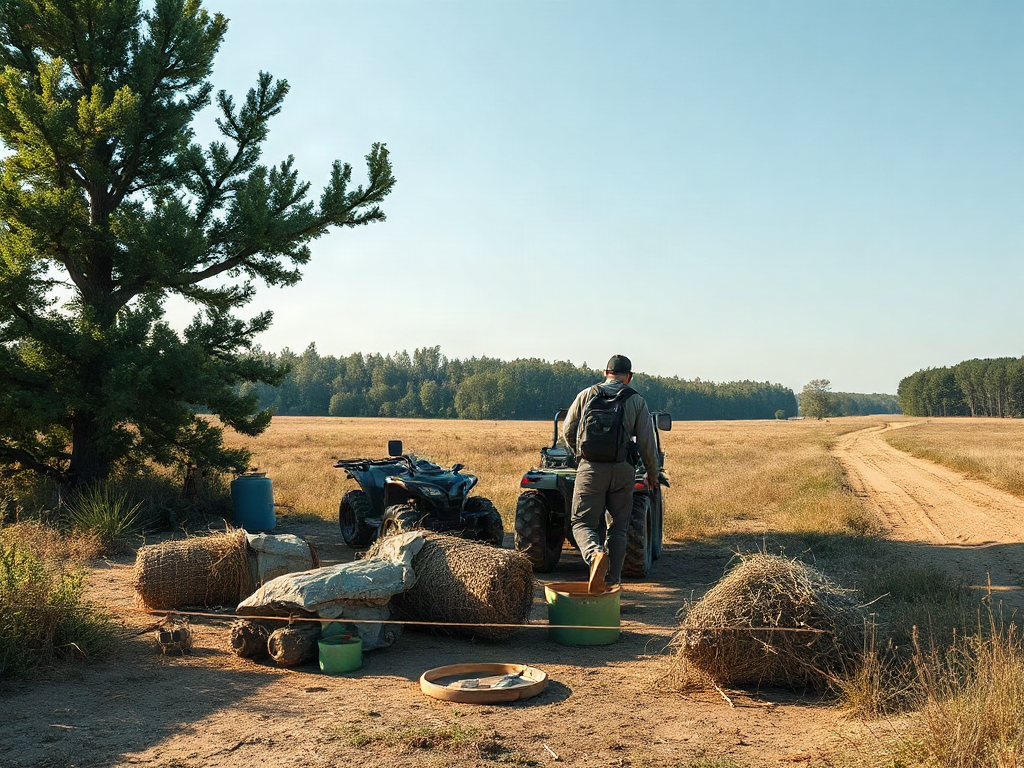
Beginners need homesteading knowledge about water, soil, access, zoning, utilities, and carrying capacity before buying land. A low purchase price can conceal an unreliable well, failed septic prospects, seasonal road problems, flood exposure, or acreage that cannot support the intended gardens and livestock. Verify legal uses with local authorities, review recorded access and easements, test water and soil, and estimate the cost of essential infrastructure before making an offer. Visit during difficult weather when possible, because drainage and road conditions may look entirely different from a dry-season showing.
What Can You Legally Do on the Property?
A rural address does not automatically permit every homesteading activity. County or municipal zoning may regulate dwelling types, accessory structures, home businesses, livestock, setbacks, lot coverage, and the number of residences allowed on a parcel. Separate rules may come from a subdivision plat, recorded covenants, a road association, or a conservation easement. A seller’s current use is not proof that a buyer can expand or even continue it.
Start with the parcel number rather than the listing description. Ask the local planning or zoning office for the property’s zoning designation and the rules currently attached to it. Describe intended uses specifically: living in an RV while building, installing a manufactured home, keeping goats or poultry, selling produce, adding a farm stand, constructing a second dwelling, or operating a workshop. “Agricultural” can describe a tax classification or existing land use without answering whether a new residence is allowed.
Building feasibility also depends on permits outside the zoning office. Land without a public sewer may need a suitable septic area and, in some jurisdictions, a reserve area for future replacement. A parcel can appear spacious while setbacks from wells, boundaries, waterways, and buildings leave little usable room. If the intended house site has not received the required evaluation, make satisfactory testing or approval a purchase contingency rather than assuming the system can be placed later.
Legal access deserves equal scrutiny. A driveway visible on the ground may cross neighboring property under an informal arrangement. Review the deed, survey, title commitment, recorded easements, and maintenance obligations with qualified local professionals. Confirm whether an easement is wide enough for construction traffic, utility installation, emergency vehicles, and year-round use. Landlocked acreage with a friendly handshake agreement is fundamentally different from a parcel with documented, transferable access.
A common mistake is asking only whether animals are allowed. The more useful question is whether the entire operating plan is allowed, including housing, fencing, manure handling, customer visits, roadside sales, and additional structures. Written answers, permit records, and recorded documents carry more decision value than a listing agent’s impression. Local requirements change, so property-specific verification must happen before the buyer becomes financially committed.
How Do You Evaluate Water, Soil, and Drainage?
Water availability should be investigated as a supply system, not treated as a checkbox. A well’s presence does not establish its yield, seasonal reliability, construction quality, potability, or ability to serve a household and irrigation at the same time. Obtain available well records, inspect the equipment, ask about dry-season performance, and arrange appropriate water-quality testing. If no well exists, neighboring well depths may offer context, but they do not guarantee the same result on the parcel being considered.
Estimate demand by intended use. A modest kitchen garden supplied with drip irrigation presents a different requirement from an orchard, greenhouse, dairy animals, or broad summer irrigation. Stored rainwater may reduce pressure on a well where collection is lawful and practical, but storage cannot create rainfall during a prolonged dry period. Surface water is not automatically available for diversion merely because a creek or pond crosses the property; applicable rights and restrictions require local verification.
Soil must be evaluated for each intended function. Productive garden soil needs workable structure, drainage, rooting depth, and manageable chemistry. A laboratory soil test can identify pH and nutrient conditions, while an on-site examination reveals compaction, shallow rock, erosion, standing water, and changes across the parcel. Imported compost can improve a contained growing area, but it is an expensive response to several acres of unsuitable ground. Raised beds may solve a vegetable-production problem without solving septic, pasture, orchard, or building-site limitations.
Drainage problems often hide during pleasant showing conditions. Walk low areas, culvert outlets, creek margins, slopes, and the proposed house site. Look for deposited debris, water marks, exposed roots, sediment fans, deeply rutted tracks, saturated vegetation, or erosion below roads. Review official flood information, but do not assume mapped flood zones describe every local drainage problem. Runoff from an uphill parcel or an undersized culvert can damage a site outside a mapped floodplain.
Consider a property with rich bottomland beside a creek and a dry bench above it. The lower ground may produce vegetables well yet be a poor location for a house, barn, or winter animal area. The upper bench may offer safer construction but require longer water lines and soil improvement. Buying intelligently means assigning each part of the land a suitable job rather than expecting the most attractive area to serve every purpose.
What Will Access, Utilities, and Infrastructure Cost?
Infrastructure can turn inexpensive acreage into an expensive project before it produces food or houses livestock. The purchase budget should account for the driveway, drainage, power, water system, wastewater system, communications, fencing, outbuildings, and equipment access. Long distances between the road, house site, well, garden, and barn increase trenching, pipe, wire, fuel, and daily labor.
Obtain site-specific estimates instead of applying a generic cost per foot. A power extension across open ground differs from one that requires easements, vegetation clearing, poles, rock excavation, or road crossings. Off-grid solar may avoid a utility extension, but it adds batteries, backup planning, load management, and eventual component replacement. The better option depends on the site and expected loads, particularly if the plan includes well pumping, refrigeration, workshop tools, or electrically heated spaces.
Road quality should be judged under the least favorable season. A smooth gravel lane in summer may become soft during spring thaw, impassable after heavy rain, or difficult to plow in winter. Steep grades, narrow turns, weak bridges, and low branches affect deliveries as well as ordinary vehicles. A concrete example is a remote building site that a pickup can reach but a well-drilling rig, septic truck, propane vehicle, or fire apparatus cannot. Improving that access may require permits, engineered drainage, substantial aggregate, or cooperation from other easement holders.
Map daily movement before deciding where structures belong. Carrying feed uphill, dragging hoses across a driveway, or walking through mud between the house and poultry shelter creates recurring work. A compact arrangement usually saves more labor than spreading projects across scenic corners of the property. At the same time, wells, septic components, waterways, fire exposure, prevailing winds, and topography constrain placement. Convenience must be balanced against safe separation and local requirements.
The frequent failure mode is budgeting for visible objects while ignoring enabling work. A barn kit is easy to price; its foundation, grading, access, drainage, permits, and utility connection may be less obvious. Build a property-specific infrastructure estimate with separate allowances for investigation, installation, maintenance, and unexpected site work. If those costs consume the funds intended for housing or essential repairs, a more developed parcel may be the lower-risk purchase even when its asking price is higher.
How Much Land Can You Realistically Manage?
Usable acreage matters more than the number printed in a listing. Steep slopes, wetlands, dense woods, exposed ridges, easements, setbacks, poor soils, and inaccessible corners can sharply reduce the area available for cultivation or animals. Conversely, a smaller parcel with sound soil, reliable water, existing fencing, and a functional outbuilding may support a beginner more effectively than a larger undeveloped tract.
Match the property to available labor, money, and the first three years of work. Gardens require bed preparation, irrigation, weed control, harvesting, and preservation. Livestock adds daily feeding, fencing inspection, shelter cleaning, health observation, and winter chores. Woodlots, long driveways, ponds, and aging structures impose maintenance even when they are not central to the food plan. Acreage that is not actively productive still has boundaries, vegetation, taxes, hazards, and access routes to manage.
Carrying capacity cannot be inferred from acreage alone. Forage growth changes with soil, rainfall, slope, plant species, season, and management. A field that looks lush during a spring visit may offer little feed during a dry summer or muddy winter. Beginners should avoid setting livestock numbers from broad stocking rules without local assessment. Starting below the apparent capacity leaves room to observe forage recovery, water demand, manure concentration, and winter feeding needs.
Consider two choices: ten raw acres requiring a well, driveway, fencing, septic system, and extensive clearing, or four improved acres with a modest house, established access, garden exposure, and a serviceable shed. The larger property offers expansion potential, but the smaller one may allow food production to begin while the owner still has time and cash for maintenance. More land is advantageous only when its productive value or privacy justifies its continuing workload.
A sound beginner property supports phased development. The first phase might include safe housing, dependable water, a kitchen garden, composting, and a small poultry setup if permitted. Orchard planting, larger livestock, workshops, and expanded storage can follow after observing the site through every season. Warning signs of excessive scale include deferred repairs, unmanaged weeds near structures, failing fences, repeated equipment rental, and projects competing for the same limited cash. A property is appropriately sized when routine upkeep leaves capacity for one planned improvement at a time.
A Pre-Offer Property Checklist
A pre-offer review should separate facts that can be verified from assumptions that merely sound plausible. Complete inexpensive document checks first, then invest in inspections and tests for a serious candidate. The sequence prevents buyers from paying for specialized evaluations before discovering a basic zoning or access conflict.
- Define the first-stage homestead. List the dwelling, water demand, garden area, animals, storage, and business activities expected during the first few years.
- Confirm legal feasibility. Check zoning, recorded restrictions, access, building requirements, animal rules, wastewater options, and any applicable water-use limitations.
- Map the site. Mark boundaries, slopes, drainage paths, flood-prone ground, utility routes, sunny growing areas, road access, and possible building locations.
- Investigate essential systems. Review well and septic records, test where appropriate, inspect existing structures, and obtain realistic infrastructure estimates.
- Visit under difficult conditions. Rain, snow, heat, or the dry season can reveal road, water, drainage, wind, and access problems hidden during an ideal showing.
- Price the first three years. Include urgent repairs, tools, fencing, site work, permits, professional services, feed, taxes, insurance, and a contingency reserve.
Conditions attached to an offer should reflect the property’s unresolved risks and local transaction practices. Depending on the parcel, buyers may need professional assistance with title, survey, financing, inspections, environmental concerns, water, septic feasibility, or land-use approval. A contingency is useful only when its wording, deadline, and exit rights are clear, so local legal and real-estate advice may be warranted.
Do not allow attractive extras to outrank basic function. An old barn has limited value if its foundation is failing; a pond does not replace verified household water; mature trees can bring shade and fire or wind exposure; and a remote view does not compensate for unreliable access. The checklist is working when it changes the decision from “Do I love this property?” to “Can this parcel legally, physically, and financially support the work I intend to do?”
Conclusion
The strongest land purchase is based on verified capacity rather than acreage, scenery, or a long list of future projects. Establish what local rules permit, whether access is recorded and usable, where dependable water will come from, and whether soil and drainage suit each planned use. Price roads, wastewater, power, fencing, and repairs before treating the remaining funds as a project budget.
Next, compare the parcel with a modest first-stage plan. Mark proposed housing, growing space, water lines, animal areas, storage, and daily travel routes on a site map. Revisit unresolved assumptions with local offices, qualified inspectors, contractors, and title or legal professionals as appropriate. Walking away from land that fails an essential test is not lost progress; it preserves resources for a parcel that can support steady, lawful development without forcing every basic system to become an emergency project.
Frequently Asked Questions
How many acres does a beginner homesteader need?
There is no dependable universal acreage. Intended crops, animals, water supply, soil, climate, household needs, and available labor determine the answer. A few well-improved acres may be more useful than a much larger parcel dominated by steep, wet, wooded, or inaccessible ground.
Should I buy raw land or an established rural property?
An established property often reduces permitting, access, and infrastructure uncertainty, although existing systems still need inspection. Raw land offers layout freedom but exposes the buyer to well, septic, road, utility, and construction costs that may be difficult to estimate before investigation.
What land test should be completed first?
Begin with zoning, legal access, and wastewater feasibility because failure in any of those areas can defeat the entire plan. Soil, water-quality, well-performance, structural, and environmental evaluations can then be selected according to the property and intended uses.
Is a creek or pond a reliable homestead water source?
Not by itself. Seasonal flow, drought, contamination, treatment needs, pumping logistics, and legal rights can limit use. Treat surface water as a resource requiring verification rather than as a guaranteed substitute for a dependable domestic supply.
How many times should I visit land before buying?
Visit more than once and under contrasting conditions when the purchase schedule allows. A dry-day showing should be supplemented by observations after rain or during the property’s difficult season, with separate attention to access, drainage, neighboring activity, noise, wind, and water availability.
Further Reading
Authoritative Sources
- USDA Web Soil Survey
websoilsurvey.nrcs.usda.govUsda.govProvides mapped soil information useful for preliminary evaluation of agricultural limitations, drainage, and land capabilities
- FEMA Flood Map Service Center
msc.fema.govFema.govOffers official flood-hazard mapping that can inform further property-specific investigation
- EPA Private Drinking Water Wells
epa.govExplains private-well stewardship, testing considerations, and common water-quality concerns
- Land-Grant University Directory
nifa.usda.govUsda.govHelps buyers locate regional extension information about soils, crops, livestock, and local growing conditions