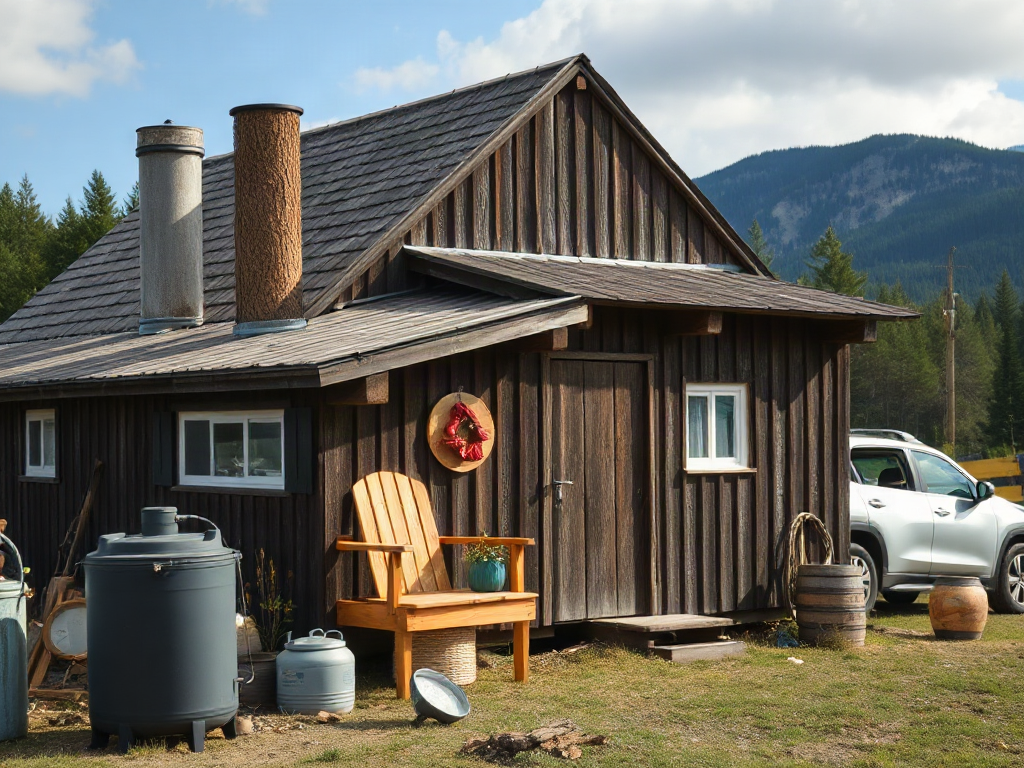
A realistic homestead startup budget separates property acquisition from essential infrastructure, income-producing projects, recurring expenses, and a protected cash reserve. Price each item as a low-to-high range, obtain local quotes for wells, septic work, fencing, power, and site preparation, then schedule purchases by season and necessity rather than buying everything at once. Include taxes, insurance, feed, fuel, repairs, permits, and replacement costs alongside visible purchases such as tools or livestock. Keep emergency money outside the project budget, because failed pumps, animal health problems, vehicle repairs, and delayed harvests can create expenses before the homestead produces dependable savings or income.
Define the Property and Operating Scope
A useful budget begins with a written description of what the property must support during its first two years. Acreage alone is a poor cost predictor. A small parcel with a failing septic system, difficult vehicle access, and no usable outbuildings may require more startup cash than a larger property with working utilities and sound fencing. Record the intended household size, water source, heating system, garden area, livestock plans, storage needs, and distance to supplies before assigning dollar amounts.
Separate the purchase transaction from the homestead projects. The property side may include a down payment, inspection, survey, appraisal, closing costs, immediate insurance payments, utility deposits, and moving expenses. The project side covers work such as repairing a barn, establishing garden beds, installing animal shelters, or adding water lines. Mixing these categories can make available project cash look larger than it is, especially when closing and moving consume funds shortly before work begins.
Existing conditions should determine the first round of spending. A functioning well is not automatically a reliable water system; its flow, water quality, pump condition, pressure equipment, electrical supply, and freeze protection all matter. Likewise, a fence visible in a property listing may not safely contain goats, sheep, cattle, or poultry. Inspections and specialist evaluations cost money, but they can expose liabilities early enough to renegotiate, change the project scope, or decline an unsuitable property.
Consider two households buying similarly priced rural parcels. One wants a kitchen garden and laying hens on land with municipal water and a secure shed. The other plans cattle on unfenced ground served by an older well. Their acquisition costs may be comparable, but the second household faces substantial water-distribution, fencing, handling, shelter, and feed-storage expenses. A budget based on the sale price or acreage would hide that difference.
Write a short operating brief with three boundaries: what must function immediately, what may be added in the first year, and what will wait. This makes Making a realistic homestead startup budget an exercise in defining a workable property rather than assembling an unrestricted wish list. If the scope cannot be described clearly, the associated estimate is not ready to guide a purchase.
Price Infrastructure With Local Cost Ranges
Infrastructure should be estimated through site-specific ranges rather than national averages or retail material prices. Wells, septic systems, driveways, trenching, electrical service, drainage, fencing, and foundation work are strongly affected by soil, rock, slope, access, travel distance, permit requirements, and contractor availability. A material total from an online calculator rarely includes mobilization, equipment time, disposal, inspection, restoration, or complications discovered underground.
Build each estimate from three figures: a low case for straightforward work, a likely case based on current local quotes, and a high case that reflects known uncertainty. Ask contractors what their quote excludes and how change orders are handled. For a water project, clarify whether the estimate includes drilling, casing, testing, pump equipment, pressure tank, trenching, wiring, treatment, and connection to the house. An attractive drilling price may cover only one part of the usable system.
Condition and capacity matter as much as installation. A driveway that works in dry weather may need grading, culverts, or aggregate before heavy delivery trucks can enter. An electrical panel may serve the house but lack capacity for a shop, well pump, freezer bank, or stock-water heaters. A barn roof repair may be wasted if posts and footings are already compromised. Paying for an assessment before selecting a repair can be cheaper than improving the wrong component.
DIY work can reduce labor expense when the task matches the owner’s skills, tools, time, and local rules. It can also shift costs rather than remove them. Renting machinery, buying protective equipment, correcting mistakes, and taking leave from paid employment belong in the comparison. Licensed or permitted work may require professional involvement, and installations tied to potable water, structural safety, wastewater, or electrical service deserve particular caution.
Use a compact estimating sequence for every major system:
- Document present condition: inspection findings, age, capacity, and visible defects.
- Define the required outcome: repair, replacement, extension, or increased capacity.
- Collect comparable quotes: confirm that labor, materials, permits, and cleanup cover the same scope.
- Record exclusions: note work that could become a separate charge.
- Assign a contingency: base it on uncertainty rather than applying one optimistic percentage to every project.
An estimate is improving when quotes converge and exclusions become specific. It is still weak when it relies on an old invoice from another property, assumes free labor, or uses the cheapest advertised component as the installed cost.
Separate Essential Purchases From Expansion Projects
Startup spending should protect water, sanitation, shelter, access, food storage, and household income before funding expansion. These systems keep the property habitable and prevent small failures from becoming expensive emergencies. Greenhouses, tractors, breeding stock, orchard blocks, and large workshops may be valuable later, but they should not displace repairs that make drinking water reliable or keep a roof weather-tight.
Rank planned purchases by consequence and timing, not enthusiasm. A useful first tier covers hazards and systems whose failure would interrupt daily life. The second tier supports a tightly defined first-year activity, such as a modest garden or one poultry flock. The third tier includes capacity that will not be used immediately. Buying the third tier early ties up cash, creates maintenance obligations, and may lock the household into a production model before it understands the land.
Equipment illustrates the tradeoff. A compact tractor can be justified when recurring mowing, loader work, snow removal, or material handling would otherwise require frequent paid service. For occasional trenching or one-time grading, rental or a local operator may cost less and avoids storage, maintenance, fuel, attachments, insurance questions, and depreciation. Used equipment reduces the purchase price but can expose the buyer to tires, hydraulics, batteries, transport, and repair costs soon after purchase.
Livestock should be budgeted as a complete system. The animal’s purchase price is only the entry charge. Suitable fencing, shelter, feeders, waterers, feed storage, bedding, transport, veterinary access, predator protection, and winter water arrangements must be ready first. A bargain group of animals can become costly if fencing is rushed or feed must be bought in small quantities. Delaying livestock until infrastructure is tested is often cheaper than improvising after arrival.
A focused first season also produces better information. Establishing a smaller garden shows where water collects, how deer enter, which beds receive usable sun, and how much produce the household can process. That evidence can guide later irrigation, fencing, tool, and storage purchases. Building the maximum garden immediately risks spending on a layout that does not suit the site.
Create a purchase gate for every optional item: identify the work it will perform in the next twelve months, compare purchase with rental or hired service, include operating and storage costs, and name the expense it would postpone. The companion worksheet for Making a realistic homestead startup budget should show those tradeoffs openly. A purchase is premature when its use is vague, its supporting infrastructure is absent, or it consumes money reserved for a higher-consequence system.
Build Recurring Costs and Cash Reserves Into the Budget
A startup total is incomplete until it includes the cost of operating the property after move-in. Rural households may face property taxes, insurance, heating fuel, electricity, internet, road upkeep, vehicle mileage, waste disposal, water treatment, feed, bedding, seed, veterinary care, equipment service, and consumable supplies. Some bills are monthly, while others arrive as large seasonal payments. Converting every expected expense to an annual figure makes those patterns visible.
Use separate columns for household costs, property operations, and project costs. Household expenses continue even if a crop fails or construction pauses. Property operations keep existing systems running. Project spending creates or expands an asset. This separation prevents garden sales or household savings from being credited against costs they cannot reliably cover. Early homestead production may reduce selected grocery purchases, but it should not be treated as dependable income until actual yields, losses, processing time, and sales expenses are known.
Replacement reserves deserve their own line. Pumps, pressure tanks, freezers, fencing components, tires, batteries, roofs, and tools wear out on different schedules. The exact failure date is unknowable, but the obligation is predictable. Record the estimated replacement cost and expected remaining life, then set aside money regularly. A used machine with no reserve may be less affordable than a smaller new purchase with known warranty coverage and manageable service requirements.
Keep a project contingency and a household emergency fund separate. Contingency money covers uncertainty inside approved work, such as additional trenching or hidden rot. Emergency savings protects the household from events such as income interruption, urgent vehicle repair, or medical travel. Spending the emergency fund on a greenhouse or livestock shelter removes the buffer precisely when the property is creating new obligations.
Cash-flow timing can expose a budget that looks sound on paper. Suppose fencing materials, winter fuel, annual insurance, and a feed delivery all come due in the same month. The annual total may be affordable, yet the household may not have enough cash at that moment. Build a month-by-month schedule showing deposits, contractor payments, seasonal purchases, and recurring bills. Delay projects when the schedule falls below the protected reserve level.
Review actual spending monthly during the first year. Signs of control include completed essentials, stable reserves, fewer unpriced tasks, and operating costs close to recorded ranges. Warning signs include repeated credit use for feed or repairs, equipment sitting unused, contractor changes funded from household savings, or new projects beginning before earlier systems work reliably. A realistic budget is a living control document: update quotes, record actual costs, and revise the sequence when the property reveals better information.
Frequently Asked Questions
What should be included in a homestead startup budget?
Include acquisition and moving costs, immediate repairs, water and sanitation, access, fencing, tools, project materials, permits, contractor labor, recurring operations, replacement reserves, and a separate household emergency fund.
How much contingency should a homestead project carry?
Base contingency on uncertainty rather than one universal percentage. A well-defined shed repair needs less protection than excavation, an aging well, or work with concealed structural damage.
Should equipment be purchased before moving to the property?
Usually not unless its workload, storage, transport, and service needs are already clear. Living on the site often reveals whether renting, hiring an operator, or buying a smaller machine is more economical.
Can projected farm income offset startup costs?
Treat unproven income cautiously. Budget with conservative sales assumptions and include seed, feed, packaging, losses, processing, transport, and market fees before assigning production revenue to essential bills.
How often should the budget be updated?
Update it when quotes change, inspections uncover defects, project scope shifts, or actual monthly spending differs from the estimate. A monthly review is useful throughout the first operating year.
Conclusion
A workable startup budget is built around the property that exists, not the fully developed version imagined at purchase. Define the first two years of use, investigate high-consequence systems, and obtain local installed-cost ranges before committing project cash. Fund habitability and reliable operations first, then add production capacity only when its supporting water, fencing, storage, labor, and cash flow are in place.
The next step is to create separate acquisition, infrastructure, operating, and reserve columns, followed by a month-by-month payment schedule. Replace assumptions with inspections and comparable quotes as they become available. If the schedule breaches the household emergency fund or depends on immediate production income, reduce the scope or delay the project. That discipline preserves options when the land exposes conditions no preliminary spreadsheet could fully predict.